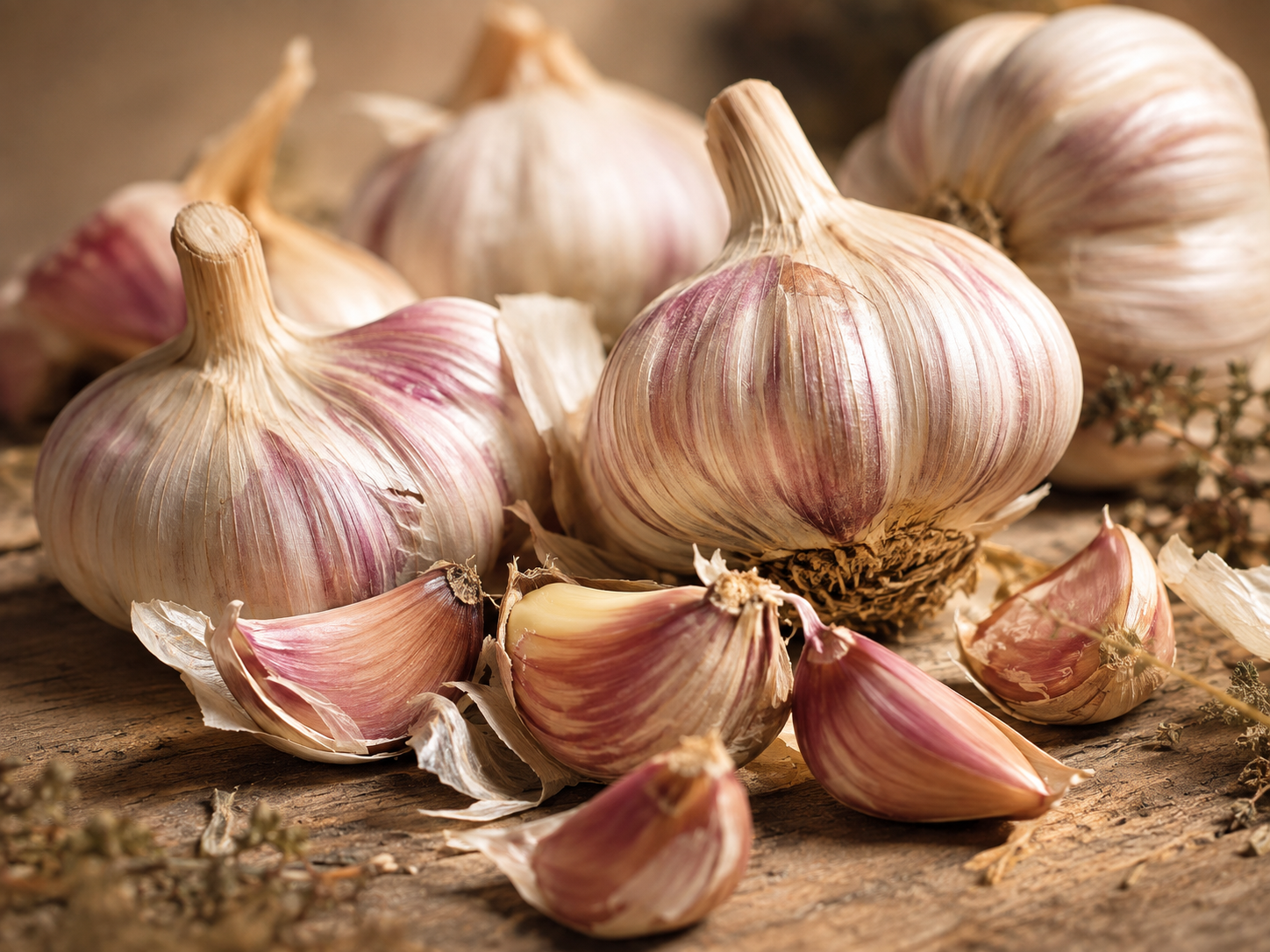
The garlic plant has spent thousands of years doing something few plants manage: living comfortably in the kitchen, the garden, the medicine chest and the imagination at the same time. Its papery bulb looks ordinary enough. Break it open, though, and a single head becomes a circle of cloves—each carrying the unmistakable scent that has traveled through cuisines, remedies and protective folklore across cultures.
Meet Garlic
Allium sativum is a bulbous member of the Amaryllidaceae family and a close relative of onions, leeks and chives. Kew’s Plants of the World Online recognizes the garlic plant as an accepted species and places its native range from Central Asia to northeastern Iran. Centuries of cultivation have carried garlic far beyond that range; today it is grown and eaten around the world.
A mature garlic bulb is divided into individual cloves beneath layers of papery skin. Above ground, the plant produces long, narrow leaves. Hardneck types can also send up curling flower stalks called scapes, which are edible in their own right.
How to Grow Garlic
Garlic begins not with a packet of ordinary garden seed but, most often, with a clove. Separate healthy cloves from a bulb and plant them pointed end upward in loose, fertile, well-drained soil with plenty of sun. Timing depends on climate, but fall planting is common because the cloves can establish roots before winter and resume strong growth when conditions warm.
The old herb guide that inspired this Plant Library recommends separating cloves from the bulb and planting them in fall, then side-dressing with compost in spring. Its portrait of garlic is wonderfully practical: a perennial bulb commonly grown as a crop, reaching roughly two feet tall, with small greenish-white to pinkish flowers.
Modern extension guidance adds an important detail: the garlic plant dislikes soggy ground. Consistent growth matters, but watering should be reduced as harvest approaches because persistently wet soil can encourage bulb rot. Gardeners growing hardneck garlic often remove the scape so more of the plant’s energy goes toward forming a larger bulb—and then eat the scape rather than wasting it.
Harvesting, Curing and Storing
Garlic tells you when the season is turning. The lush green leaves begin to yellow and brown while the bulb finishes beneath the soil. Harvest too early and the cloves may not be fully formed; leave mature bulbs in wet ground too long and their protective wrappers can deteriorate.
The book recommends digging bulbs after the tops have died down, before the skins begin to decay underground, then curing them in a dry, shaded place with good air movement. Contemporary extension guidance follows the same basic rhythm: lift mature bulbs, cure them somewhere warm and dry out of direct sun, and store properly dried garlic in a cool, dry, well-ventilated place.
Softneck garlic has another old-fashioned advantage: its flexible dried tops can be braided. A braid of garlic hanging in a kitchen is therefore more than decoration. It is a storage technology that became an aesthetic.
A Plant Humans Carried Everywhere
Garlic’s history is ancient enough that separating food from medicine from ritual becomes difficult. Kew notes references to garlic in ancient Egyptian, Greek, Indian and Chinese writings, and garlic bulbs were found in the tomb of Tutankhamun. Across generations, people valued the plant for flavor while also attaching ideas of strength, health and protection to its extraordinary scent and physical effects.
That dual identity survives. Crush a clove and chemistry becomes sensory: the mild interior suddenly produces the penetrating aroma we recognize as garlic. Long before anyone could describe sulfur compounds in a laboratory, people could tell that breaking the plant changed it.
Garlic in the Kitchen
Raw, roasted, fried, simmered or fermented, garlic can move from sharp heat to deep sweetness depending on how it is prepared. The bulb is the familiar culinary star, but young green garlic, leaves and scapes can also be eaten.
Its ubiquity is part of what makes garlic culturally fascinating. Rather than belonging to one cuisine, it appears again and again in food traditions across continents. It can disappear into a sauce or announce itself before the plate reaches the table.
The Old Medicine Chest
Garlic has a long history in traditional medicine, but historical use and modern clinical evidence are not the same thing. Ancient and traditional sources describe garlic for many complaints, while today’s research has concentrated particularly on cardiovascular and metabolic measures.
The U.S. National Center for Complementary and Integrative Health reports that garlic supplements may produce small reductions in total and LDL cholesterol in people with high cholesterol, and limited evidence suggests small effects on blood pressure and blood sugar in some groups. Claims about immune boosting are much less certain. That makes garlic a good example of why a plant’s traditional reputation is worth preserving without turning every old use into a modern medical promise.
Folklore, Wards and the Doorway
Then there is the garlic everyone knows from stories.
Across parts of European folklore, the garlic plant became associated with protection and keeping harmful forces away. Kew records traditions of garlic warding against demons, werewolves and, most famously, vampires. The vampire connection eventually became so culturally dominant that a string of garlic can communicate “protection” in a story before a character says a word.
But the symbolism reaches beyond gothic fiction. Garlic also appears on the Persian Nowruz Haft-sin table as seer, where Kew notes its association with medicine and good health. Different traditions gave the same pungent bulb different languages of protection, vitality and well-being.
The Magical Tradition
In modern magical practice, garlic naturally inherits the qualities generations already placed upon it: protection, boundaries, cleansing, courage and the refusal of unwanted influence. A bulb beside a threshold, cloves incorporated into protective folk customs, or simply garlic grown near the home all draw upon the same old metaphor—the household decides what may enter.
There is something fitting about the bulb itself. Many cloves, individually wrapped, held together beneath one outer skin. Protection here does not have to mean isolation. It can mean having layers.
Safety: Food Is Not the Same as a Remedy
Garlic used normally as food is different from concentrated supplements or raw garlic applied directly to skin. NCCIH warns that fresh raw garlic used topically can cause severe irritation and chemical burns. Garlic supplements may also interact with medicines and can increase bleeding risk in some circumstances, particularly around surgery or when combined with medications that affect clotting.
If you’re considering garlic as a concentrated supplement rather than simply enjoying it as food, especially while taking medication, discuss it with a pharmacist or other qualified health professional.
Why Garlic Belongs in the Plant Library
The garlic plant makes the purpose of this library unusually clear. A plant doesn’t have to choose between being practical and enchanted. Garlic can be planted in autumn, braided after harvest, crushed into dinner, studied in a laboratory and hung in a centuries-old story about what we fear after dark.
Sometimes the most magical plants are the ones already sitting in the kitchen.
Sources & Further Reading
- Herbs: Guide to Plants · 500 Photographs · Recipes and Crafts, p. 108–111. Physical reference copy used as the starting point for this Plant Library entry.
- Royal Botanic Gardens, Kew — Allium sativum, Plants of the World Online and Kew Garlic species profile.
- National Center for Complementary and Integrative Health — “Garlic: Usefulness and Safety.”
- NC State Extension Gardener Plant Toolbox — Allium sativum.
Plant Library note: Historical, folkloric and traditional medicinal uses are documented here as cultural and ethnobotanical history. They are not medical advice or proof that a traditional remedy is safe or effective.
Leave a Reply