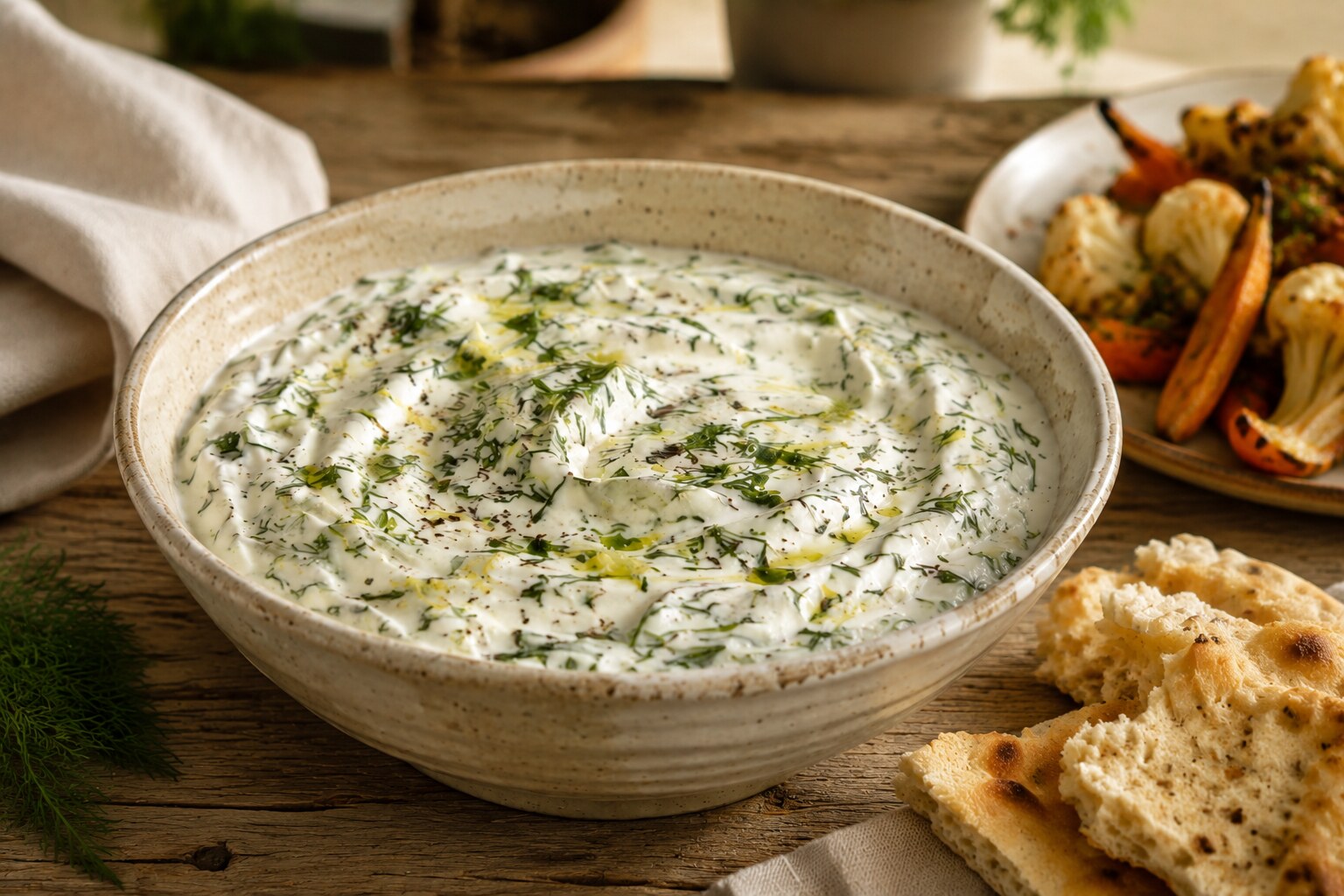
Garlic-herb Greek yogurt sauce is the kind of recipe that quietly rescues the rest of dinner. Spoon it over roasted vegetables, tuck it into a wrap, drag warm flatbread through it, or drizzle it across chicken and grain bowls. Ten minutes of mixing creates something cool, bright, creamy, and far more useful than its short ingredient list suggests.
Fresh herbs give it garden flavor, lemon keeps it lively, and a single small clove of garlic grows more expressive as the sauce rests. Make it thick for dipping or thin it with water until it falls from a spoon like dressing.
This is recipe #7 in the collection of 25 easy recipes with Greek yogurt. It is especially good beside lemon-yogurt chicken and warm two-ingredient Greek yogurt flatbread.
Why this Greek yogurt sauce works
Greek yogurt is naturally thick enough to hold chopped herbs and grated garlic in suspension. Lemon juice sharpens the flavor without making the sauce watery, while olive oil rounds out the yogurt’s tang. A brief rest gives the garlic time to soften and the herbs time to perfume the whole bowl.
Whole-milk or 2% Greek yogurt makes the smoothest sauce. Nonfat yogurt works when that is what you keep on hand, though the flavor is sharper and the texture can be slightly chalkier. Choose plain, unsweetened yogurt.
Ingredients
- 1 cup plain Greek yogurt
- 1 small clove garlic, finely grated
- 2 tablespoons finely chopped fresh herbs, such as dill, parsley, and chives
- 1 tablespoon fresh lemon juice
- 1 teaspoon finely grated lemon zest
- 1 tablespoon extra-virgin olive oil, plus more for serving
- ¼ teaspoon fine salt, plus more to taste
- Freshly ground black pepper
- 1–3 tablespoons cold water, as needed
How to make garlic-herb Greek yogurt sauce
1. Prepare the garlic and herbs
Finely grate the garlic so it disappears into the yogurt rather than leaving harsh pieces. Chop the herbs with a sharp knife. Very wet herbs can loosen the sauce, so pat them dry after washing.
2. Stir the base together
Combine the yogurt, garlic, herbs, lemon juice, lemon zest, olive oil, salt, and several turns of black pepper in a bowl. Stir until the herbs are evenly distributed and the olive oil disappears into the yogurt.
3. Choose the consistency
Leave the sauce thick for dipping. For spooning over vegetables or chicken, stir in 1 tablespoon cold water. For a pourable grain-bowl or salad dressing, add 2–3 tablespoons, one at a time, until it reaches the texture you want.
4. Let it rest
Cover and refrigerate for 15 minutes before serving. This short rest mellows the raw garlic and makes the herbs taste like part of the sauce rather than separate ingredients.
Taste again after resting. Add another pinch of salt, squeeze of lemon, or turn of black pepper if needed. Finish with a small swirl of olive oil.
The best herbs to use
A blend creates the roundest flavor, but the sauce is flexible enough to follow whatever is fresh.
- Dill: cool, feathery, and especially good with cucumber, potatoes, fish, and carrots.
- Parsley: clean and grassy; it keeps stronger herbs from taking over.
- Chives: softly onion-like and excellent with chicken, potatoes, and eggs.
- Mint: bright and refreshing with lamb, peas, zucchini, or spicy food.
- Cilantro: lively with lime, roasted sweet potatoes, tacos, or grain bowls.
- Basil: sweeter and warmer, especially with tomatoes and summer vegetables.
Rosemary, sage, and oregano are more powerful when raw. If using them, chop very finely and begin with ½–1 teaspoon rather than a full tablespoon.
Ways to serve it
- As a dip for roasted carrots, cauliflower, broccoli, radishes, or raw vegetables
- With warm flatbread, pita, crackers, or toasted sourdough
- Spoon over grilled or roasted chicken
- Drizzle across grain bowls, lentils, chickpeas, or roasted potatoes
- Spread inside wraps and sandwiches
- Serve with salmon, shrimp, or crisp fish cakes
- Use as a cool topping for baked potatoes
- Thin into a creamy herb salad dressing
For a simple lunch board, pair the sauce with torn flatbread, roasted vegetables, olives, sliced cucumber, and leftover Greek yogurt chicken salad.
Easy flavor variations
- Lemon-dill: Use all dill and increase the lemon zest to 2 teaspoons.
- Chive and black pepper: Use all chives and add plenty of coarsely ground pepper.
- Mint-cucumber: Fold in ¼ cup finely grated, well-squeezed cucumber for a tzatziki-adjacent sauce.
- Smoky paprika: Add ½ teaspoon smoked paprika and a pinch of cumin.
- Spicy herb: Stir in crushed red pepper, cayenne, or a spoonful of chili crisp just before serving.
- Green goddess-inspired: Blend parsley, chives, basil, and a small amount of anchovy or capers into the yogurt.
- Cilantro-lime: Replace the lemon with lime and use cilantro in place of dill.
Substitutions
- Regular plain yogurt: Strain it through a fine-mesh sieve or cheesecloth until thick before measuring.
- Dried herbs: Fresh herbs are best, but 2 teaspoons of a dried herb blend can work. Rest the sauce for at least 30 minutes so the herbs soften.
- Garlic powder: Use ¼ teaspoon for a milder, smoother garlic flavor.
- No lemon: Use 2 teaspoons white wine vinegar or apple cider vinegar, then adjust to taste.
- Dairy-free: Choose a thick, unsweetened plant-based yogurt. Coconut-based yogurt may contribute a noticeable sweetness.
Troubleshooting
Why is the sauce too thin?
The yogurt may be less strained, the herbs may have carried extra water, or too much lemon was added. Stir in more Greek yogurt and chill the sauce for 20–30 minutes. It often firms slightly as it rests.
Why is the garlic too strong?
Raw garlic becomes more pronounced as it sits. Stir in additional yogurt, olive oil, and a small pinch of salt. Next time, use half a clove or substitute garlic powder. A very small clove is enough for one cup of yogurt.
Why does it taste flat?
Cold sauces often need more seasoning than expected. Add salt first, then lemon, and finally pepper. If the flavor is sharp but still seems incomplete, a teaspoon of olive oil can provide the missing roundness.
Why is the sauce bitter?
Too much raw rosemary, sage, oregano, or mature parsley stem can taste bitter. Balance it with more yogurt and lemon zest, and use tender leaves rather than woody stems in the next batch.
Make-ahead and storage
The sauce can be made several hours ahead and often tastes better after a short rest. Store it in a covered container in the refrigerator for up to 4 days. Stir before serving; a little separated liquid is normal.
If the sauce thickens in the refrigerator, loosen it with a teaspoon of cold water or lemon juice. Freezing is not recommended because yogurt can separate and become grainy when thawed.
Frequently asked questions
Is this the same as tzatziki?
No. Tzatziki usually includes a generous amount of grated cucumber and is traditionally flavored with garlic, dill or mint, lemon, or vinegar. This sauce is herb-forward and cucumber-free, so it is thicker and more flexible.
Can I turn it into salad dressing?
Yes. Whisk in cold water one tablespoon at a time until pourable. For a slightly richer dressing, add another teaspoon of olive oil. Taste again after thinning because the seasoning becomes less concentrated.
Can I blend the sauce?
You can, especially for a smooth green sauce. Pulse briefly rather than blending for a long time; some herbs can become bitter when overworked, and yogurt may thin as it is blended.
A bowl that gathers dinner together
There is a useful kind of abundance in a sauce like this. A little yogurt becomes dip, dressing, spread, and finishing spoonful all at once. Garlic gives it backbone, herbs bring the garden close, and whatever else is on the table suddenly feels like it belongs together.
Leave a Reply