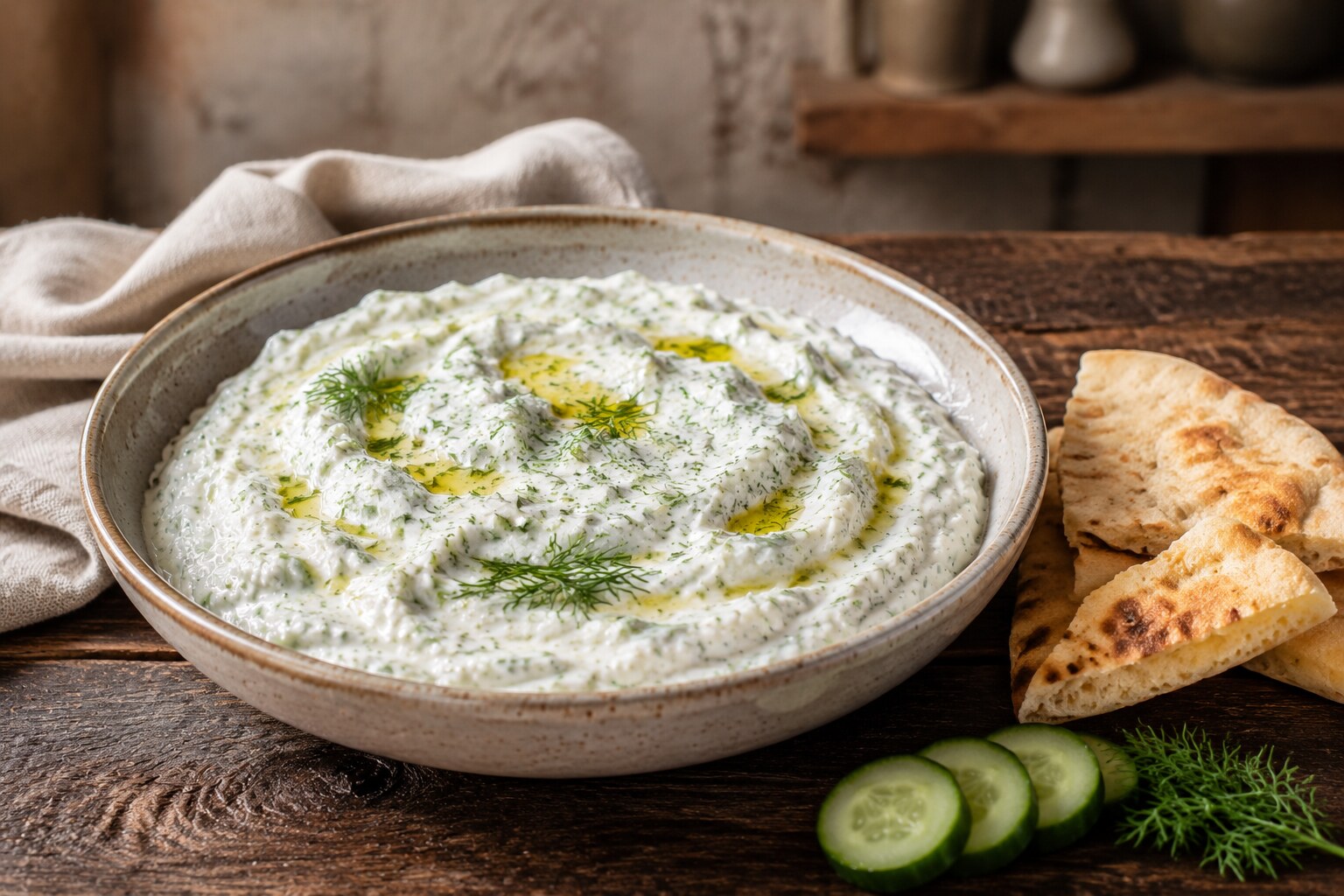
Quick tzatziki turns a handful of cool, ordinary ingredients into the sauce that makes the whole plate feel finished. Thick Greek yogurt carries cucumber, garlic, lemon, and dill; a little olive oil softens the edges. Spoon it beside warm flatbread, grilled chicken, roasted vegetables, or anything that needs something fresh and creamy.
The recipe itself takes about 10 minutes. The only important pause is for the cucumber: squeeze out its excess water before stirring it into the yogurt. That one small step keeps homemade tzatziki thick instead of watery.
This is recipe #8 in 25 Easy Recipes with Greek Yogurt. If you want a cucumber-free alternative, try the garlic-herb Greek yogurt sauce.
What is tzatziki?
Tzatziki is a cool yogurt-and-cucumber sauce associated especially with Greek cuisine, with related versions found throughout the eastern Mediterranean and nearby regions. Recipes vary, but thick yogurt, drained cucumber, garlic, olive oil, salt, and an herb such as dill or mint form the familiar foundation.
It can be served as a dip, a sauce, or part of a larger spread. The flavor is creamy and tangy rather than heavy, with the cucumber bringing freshness and the garlic becoming gentler after the sauce rests.
Ingredients
- 1 cup plain Greek yogurt, preferably whole-milk or 2%
- ½ medium cucumber, about ¾ cup coarsely grated
- 1 small clove garlic, finely grated or minced
- 1 tablespoon fresh lemon juice
- 1 tablespoon extra-virgin olive oil, plus more for serving
- 1 tablespoon chopped fresh dill
- ¼ teaspoon fine salt, plus more for draining and seasoning
- Freshly ground black pepper, optional
How to make quick tzatziki
1. Grate the cucumber
Grate the cucumber on the large holes of a box grater. You may peel it first, leave the peel on, or remove alternating strips for a softer texture with a little color. If the cucumber has very large, watery seeds, scrape those out before grating.
2. Squeeze it dry
Sprinkle the grated cucumber with a small pinch of salt and let it stand for 5 minutes. Gather it in a clean kitchen towel, cheesecloth, or several layers of sturdy paper towel, then squeeze firmly over the sink. Continue until it no longer releases a stream of liquid.
This is the difference between thick tzatziki and cucumber-flavored yogurt soup. The cucumber does not need to be bone-dry, but removing most of its water protects the sauce’s texture as it rests.
3. Mix the sauce
Stir the drained cucumber, Greek yogurt, garlic, lemon juice, olive oil, dill, and salt together. Add black pepper if you like. Taste, remembering that the garlic and herbs will become more noticeable after resting.
4. Rest and finish
You can serve the tzatziki immediately, but 15–30 minutes in the refrigerator improves it. Taste again, adjust the salt or lemon, and finish with a small thread of olive oil and a little fresh dill.
Do you have to peel the cucumber?
No. Thin-skinned English and Persian cucumbers can usually be grated with the peel intact. Standard garden cucumbers sometimes have thicker or waxed skin, so peeling all or part of it may give the sauce a more tender texture.
The seeds matter more than the peel. Small, tender seeds disappear into the sauce; large mature seeds hold extra water and can be scooped out before grating.
Dill, mint, or both?
Dill gives this version its soft, grassy character and pairs naturally with cucumber and lemon. Fresh mint makes the sauce brighter and cooler. Use either one, or combine 2 teaspoons dill with 1 teaspoon mint.
Fresh herbs produce the cleanest flavor. If dried dill is what you have, begin with 1 teaspoon and let the sauce rest for at least 30 minutes so the herb can soften. Avoid replacing fresh mint with a full tablespoon of dried mint; it is much more concentrated.
Ways to serve tzatziki
- With warm pita or two-ingredient Greek yogurt flatbread
- Beside grilled or roasted chicken
- With lamb, meatballs, kebabs, or falafel
- Spoon over roasted potatoes, carrots, zucchini, or cauliflower
- Spread inside wraps, gyros, and sandwiches
- Add to grain bowls with chickpeas, tomatoes, and greens
- Serve as a dip for cucumber, peppers, radishes, and snap peas
- Dollop onto lentil soup or a baked potato
For an easy dinner, serve it with the lemon-yogurt chicken marinade, flatbread, tomatoes, and a simple chopped salad.
Easy variations
- Extra-lemon tzatziki: Add ½ teaspoon finely grated lemon zest along with the juice.
- Mint tzatziki: Replace the dill with 1 tablespoon finely chopped fresh mint.
- Herb-garden version: Combine dill, mint, parsley, and chives, keeping the total near 2 tablespoons.
- Spicy tzatziki: Finish with crushed red pepper, Aleppo-style pepper, or a restrained spoonful of chili oil.
- Roasted-garlic version: Replace raw garlic with one soft roasted clove for a sweeter, gentler sauce.
- More traditional tang: Use red wine vinegar instead of lemon juice, beginning with 2 teaspoons.
Substitutions
- Regular plain yogurt: Drain it in a cheesecloth-lined sieve in the refrigerator until it is as thick as Greek yogurt.
- Garlic powder: Use ¼ teaspoon for a mild, evenly distributed garlic flavor.
- No lemon: Substitute 2 teaspoons red wine vinegar or white wine vinegar, then adjust to taste.
- Dairy-free: Use a thick, unsweetened plant-based yogurt. Check the flavor first, because coconut-based yogurt may taste noticeably sweet.
- No fresh dill: Use 1 teaspoon dried dill or choose fresh mint.
How to keep tzatziki from becoming watery
- Begin with thick Greek yogurt rather than regular yogurt.
- Squeeze the grated cucumber thoroughly.
- Measure the lemon juice instead of adding a large squeeze blindly.
- Dry washed herbs before chopping them.
- Stir the sauce before serving rather than pouring off a small amount of natural separation.
If the finished sauce is already too thin, stir in additional Greek yogurt and chill it for 20 minutes. Do not add flour or starch; they dull the fresh flavor and can create an unpleasant texture.
Troubleshooting homemade tzatziki
Why is my tzatziki too garlicky?
Raw garlic strengthens as it sits. Add more yogurt and cucumber to dilute it, then adjust the salt and lemon. A small clove is plenty for one cup of yogurt; very large cloves can overwhelm the sauce.
Why does it taste bland?
Cold sauces often need a little more salt than expected. Add a pinch of salt, stir, and taste before adding more lemon. If it tastes sharp but still flat, another teaspoon of olive oil may supply the missing roundness.
Why is it bitter?
Older cucumber peel, too much lemon pith, harsh olive oil, or overworked herbs can introduce bitterness. Peel thick-skinned cucumbers, grate only the yellow lemon zest, and use tender herb leaves.
Make-ahead and storage
Tzatziki benefits from a short rest and can be prepared several hours ahead. Keep it covered in the refrigerator and use it within 3–4 days. Stir before serving; a little liquid at the edges is normal.
Freezing is not recommended. Both yogurt and cucumber can release water after thawing, leaving the sauce grainy and separated. If preparing a meal in advance, make the tzatziki fresh or no more than a day ahead for its best texture.
Frequently asked questions
Can I make tzatziki without cucumber?
You can make a delicious yogurt sauce without cucumber, but it will no longer be tzatziki in the usual sense. Use the garlic-herb Greek yogurt sauce as the cucumber-free version.
Can I use a food processor?
Yes, but pulse the cucumber briefly rather than puréeing it. Finely chopped cucumber releases even more water, so squeeze it especially well. Stir the yogurt in by hand to preserve its thick texture.
Is tzatziki a dip or a sauce?
It is both. Serve it thick as a dip, or loosen it with a teaspoon or two of cold water for drizzling. Its role changes with the meal without requiring a different recipe.
Cool, bright, and ready for the table
Tzatziki is a small lesson in useful kitchen magic: remove what the cucumber does not need, give the garlic a moment to settle, and a plain bowl of yogurt becomes the thread that ties dinner together. It is fresh enough for summer vegetables, sturdy enough for warm bread, and simple enough to make whenever the table asks for something cool.
Leave a Reply