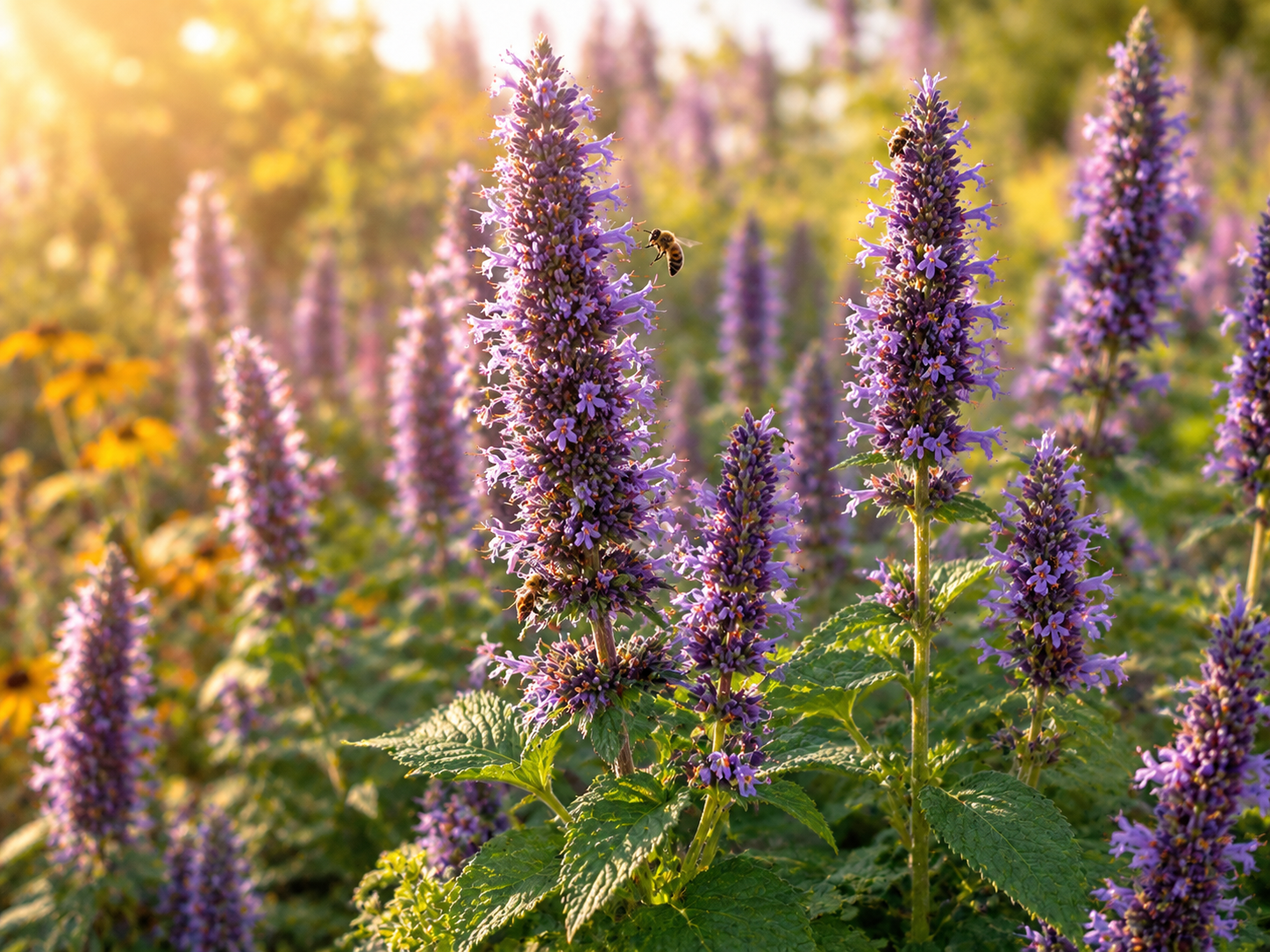
Anise hyssop announces itself twice. First come the tall lavender-purple flower spikes, busy with bees and butterflies. Then, brush a leaf between your fingers and another identity appears: sweet, green and unmistakably reminiscent of anise or licorice.
Its common name is a little misleading. Agastache foeniculum is neither true anise nor the Mediterranean herb usually called hyssop. It belongs to the mint family, Lamiaceae, and is a North American perennial with its own botanical and cultural story.
Meet Anise Hyssop
Kew’s Plants of the World Online recognizes Agastache foeniculum (Pursh) Kuntze as an accepted species native from Canada into the northwestern and north-central United States. It is a temperate perennial in the mint family.
Like many members of that family, it carries aromatic foliage and upright stems. Dense spikes of small lavender to purple flowers rise above the leaves, often making the plant conspicuous long before its scent gives it away. Depending on conditions, mature plants can reach several feet tall.
How to Grow Anise Hyssop
Anise hyssop is wonderfully suited to a garden that is allowed to feel alive. Give it sun and soil that drains reasonably well. Once established it can tolerate periods of dryness, while persistently soggy soil can encourage crown and root problems.
It can be grown from seed and established plants may also be divided. Its upright habit works beautifully in herb gardens, cottage borders, naturalistic plantings and pollinator gardens. Allowing some flower heads to remain after bloom can extend the plant’s ecological usefulness and may also allow seedlings to appear nearby.
A Table Set for Pollinators
One of anise hyssop’s great pleasures is that growing it rarely feels like growing it for yourself alone. The flowers attract bees and butterflies, and North Carolina State Extension recommends the species for pollinator and wildlife gardens.
A mature patch in bloom can feel less like a flower arrangement than a small gathering place. That makes anise hyssop particularly at home in this plant library: its usefulness is relational. It feeds, scents, shelters and invites.
Leaves, Flowers and the Kitchen
The aromatic leaves and flowers are edible and can be used as flavoring. Their sweet anise-like character works naturally in herbal tea, and small amounts can be used in salads, baked goods and other dishes where a fresh licorice note makes sense. Extension references also describe culinary uses for the seeds.
As with any edible garden plant, correct identification matters. The word “hyssop” appears in the common names of several different plants, so a label or common name alone should never substitute for knowing the species you have.
An Indigenous North American Plant Tradition
Anise hyssop’s human history did not begin when it entered modern herb gardens. Ethnobotanical records document relationships between Agastache foeniculum and Indigenous peoples of North America. Historical records describe culinary uses among peoples including the Lakota, Omaha and Pawnee, as well as traditional preparations associated with colds and coughs among communities including the Cheyenne and Chippewa.
Those traditions belong to specific peoples and histories. They should not be collapsed into a generic claim that “Native Americans used the herb,” nor should historical use be presented as modern clinical proof. What the record does show is a plant woven into foodways and traditional knowledge long before today’s renewed enthusiasm for native pollinator gardens.
Traditional Herbal Use and Modern Claims
Anise hyssop has continued to appear in North American herbal traditions, particularly in preparations associated with the respiratory and digestive systems. Its aromatic leaves made tea an intuitive preparation, especially in communities already familiar with the plant as food.
Traditional use, however, is not the same thing as established medical effectiveness. Evidence for treating specific health conditions with anise hyssop is limited, and a historical remedy should not replace appropriate medical care.
Folklore and the Magical Tradition
In contemporary folk and magical herbal practice, anise hyssop is often associated with purification, sweetness, communication, protection and the ability to draw beneficial attention. These associations vary widely between modern traditions and should be understood as spiritual symbolism rather than botanical fact.
Still, the symbolism has an appealing physical logic. Anise hyssop does not demand attention with thorns or enormous flowers. It draws life toward itself with fragrance and nectar.
There are many ways to be magnetic. Some are loud. Anise hyssop suggests another: become nourishing enough that what belongs near you can recognize the invitation.
Safety
Culinary use of correctly identified anise hyssop is different from using concentrated extracts, essential oils or medicinal doses. Research on medicinal use is comparatively limited. If you are pregnant or breastfeeding, giving herbal preparations to a child, taking medication, or managing a health condition, discuss concentrated or medicinal use with a qualified clinician or pharmacist.
Anyone with known sensitivities should introduce unfamiliar edible plants cautiously, and wild-harvested plants should only be used when identification and growing conditions are certain.
Why Anise Hyssop Belongs in the Plant Library
After aloe’s inward reserve, anise hyssop opens the door again. Its story is one of exchange: sunlight becomes flower, flower becomes nectar, leaf becomes fragrance, and a patch of earth becomes a meeting place for insects, people, food and memory.
It is difficult to stand beside anise hyssop in bloom and imagine a plant as an isolated thing. Everything around it is answering.
Sources & Further Reading
- Owen, W. (2016). Herbs: Guide to Plants, 500 Photographs, Recipes and Crafts, pp. 104–105.
- Royal Botanic Gardens, Kew. Plants of the World Online: Agastache foeniculum (Pursh) Kuntze.
- North Carolina State Extension. Extension Gardener Plant Toolbox: Agastache foeniculum.
- Ethnobotanical records documenting historical Indigenous uses of Agastache foeniculum, consulted through university botanical resources.
This article is for botanical, historical and cultural education and is not medical advice.
Leave a Reply