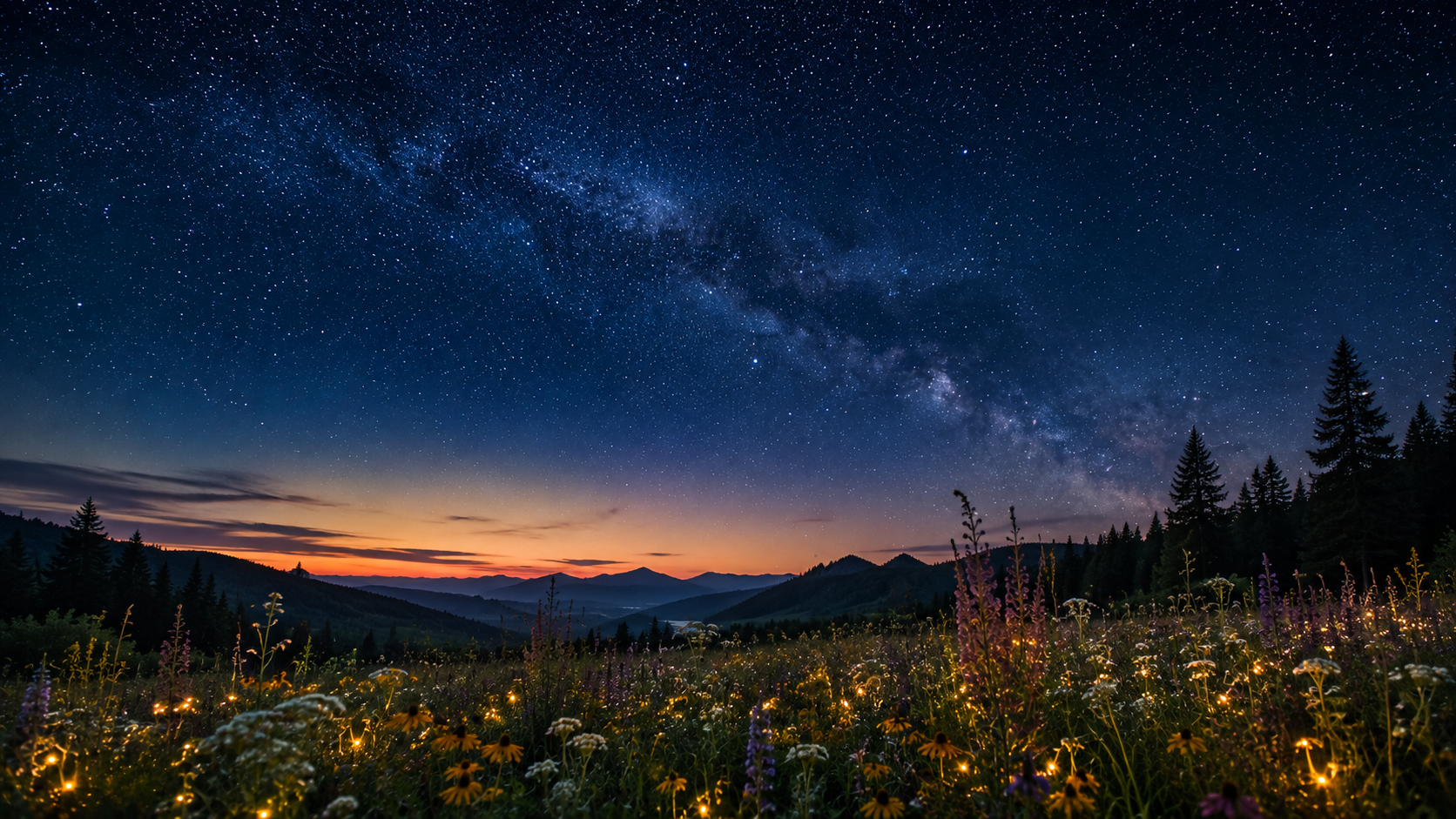
The new moon marks the beginning of a new lunar cycle. Astronomically, the Moon is positioned near the Sun in our sky, so its illuminated side faces away from Earth and the Moon is usually invisible. Symbolically, many people use this dark-sky phase as a monthly moment for reflection, intention setting, and beginning again.
New Moon at a Glance
- Illumination: Approximately 0% from Earth’s perspective.
- Place in the cycle: First of the eight commonly recognized lunar phases.
- Traditional themes: Beginnings, possibility, reflection, and quiet growth.
- Simple practices: Journaling, intention setting, planning, meditation, or a quiet walk beneath the dark sky.
- Journal prompt: What would I like to nurture during this lunar cycle?
What Is the New Moon?
The Moon does not create its own light; it reflects sunlight. During the new moon, the Moon is roughly between Earth and the Sun, leaving the sunlit half facing away from us. Because it is also close to the Sun in the sky, it is normally difficult or impossible to see. A thin waxing crescent becomes visible after the new moon as the Moon continues along its orbit.
A complete cycle from one new moon to the next takes about 29.5 days. That dependable rhythm helped people measure time long before modern calendars and clocks, and lunar calendars remain important in many cultural and religious traditions today.
What Does the New Moon Mean?
The astronomy and the symbolism are different things. Science explains the new moon through the positions of the Sun, Earth, and Moon. The familiar themes of beginnings, renewal, and intention come from cultural traditions and modern reflective practices rather than evidence that the lunar phase controls human behavior.
Still, the symbolism is easy to understand. The Moon disappears before its light gradually returns. Seeds begin growing below the soil before anything is visible above it. A new project often begins as a private idea. The new moon can therefore serve as a useful monthly marker for things that are beginning quietly.
New Moon Ritual for Beginners
You do not need special tools or an elaborate ceremony. Try this ten-minute practice:
- Pause. Put away distractions and spend a minute noticing where you are physically and emotionally.
- Reflect. Write down one thing you are ready to leave behind from the previous cycle.
- Choose an intention. Name one quality, project, relationship, or habit you would like to nurture.
- Make it practical. Write one small action you can take within the next few days.
- Close quietly. Step outside, make tea, light a candle safely, or simply sit for another minute before returning to your evening.
What Do You Need for a New Moon Ritual?
Very little. For a beginner, a notebook or journal, a pen, and ten quiet minutes are enough. A candle, tea, crystals, incense, tarot cards, or other ritual objects can make the moment feel intentional, but none of them are required. The useful part of the practice is choosing what you want to nurture and connecting that intention to something you can actually do.
New Moon Intentions and Journal Prompts
A useful intention is less like a wish and more like a direction for the coming lunar cycle. Keep it within your influence and pair it with a small action. For example: I am making room for creativity might become fifteen minutes of drawing twice this week; I am creating more calm might become a screen-free bedtime routine.
- What would I genuinely like to begin during this lunar cycle?
- What deserves more of my attention over the next month?
- What am I ready to stop carrying forward?
- How would I like this next month to feel?
- What is one small action I can take before the waxing crescent?
More Ways to Observe the New Moon
- Begin a lunar or nature journal.
- Take a dark-sky walk and notice stars that are easier to see without bright moonlight.
- Sketch a garden plan, organize seeds, or prepare for the next growing season.
- Start one small creative project rather than waiting for the perfect moment.
- Create a simple monthly family tradition such as an evening walk or shared reflection.
New Moon Science vs. Symbolism
The Moon has measurable physical effects on Earth, most famously its role in ocean tides. Around new and full moons, the alignment of the Sun, Earth, and Moon contributes to larger tidal ranges known as spring tides. That physical relationship should not be confused with claims that lunar phases reliably control mood, behavior, or personal outcomes; research has not established those popular claims consistently.
You can appreciate the new moon without choosing between astronomy and meaning. One describes what is happening in the sky; the other gives us a recurring occasion to reflect on our own lives.
Listen: Where the Light Begins Again
Rhythm Rielly’s original song Where the Light Begins Again approaches the new moon emotionally rather than astronomically. It lingers in the space between an ending and whatever comes next—the same quiet interval that makes the new moon such a natural symbol for beginnings that have not yet become visible.
Frequently Asked Questions
What are new moon rituals?
New moon rituals are personal or spiritual practices associated with the beginning of the lunar cycle. Modern examples include journaling, meditation, setting intentions, planning goals, or spending quiet time outdoors.
Can you see the new moon?
Usually not. During the astronomical new moon, the illuminated half faces away from Earth and the Moon appears close to the Sun in our sky. A thin crescent generally becomes visible afterward.
Do I have to be spiritual to observe the new moon?
No. You can treat it simply as a recurring natural marker for reflection, skywatching, creative planning, or noticing seasonal change.
Does the new moon affect human behavior?
The Moon influences Earth’s tides, but there is not strong consistent evidence that the new moon directly controls human moods or behavior. Symbolic lunar practices can still be personally meaningful without making that scientific claim.
When is the best time to do a new moon ritual?
There is no scientifically established “power window” for a ritual. If you use the new moon symbolically, the night of the astronomical new moon or a day on either side is an easy time to mark the transition. Consistency matters more than hitting an exact minute.
Can you do a new moon ritual during the day?
Yes. The astronomical phase is not limited to nighttime, and the reflective practice does not depend on seeing the Moon. Choose a time when you can be present without rushing.
Do you need crystals for a new moon ritual?
No. Crystals, candles, incense, and altar tools are optional. A journal and a few quiet minutes are enough for intention setting.
What is the difference between a new moon and full moon ritual?
In many modern lunar practices, the new moon is used as a marker for beginnings, intentions, and planning, while the full moon is associated with culmination, reflection, celebration, or release. These are symbolic traditions rather than scientifically demonstrated effects of the lunar phases.
Explore the lunar cycle: Visit the Moon Phases guide for all eight phases in order, or continue to the Waxing Crescent Moon.
Recommended New Moon Resources
As an Amazon Associate, Rhythm Rielly earns from qualifying purchases at no additional cost to you.
- Moon journals for recording intentions and observations.
- Moon phase guides for learning the lunar cycle.
- Beeswax candles for a simple reflective ritual.
Leave a Reply