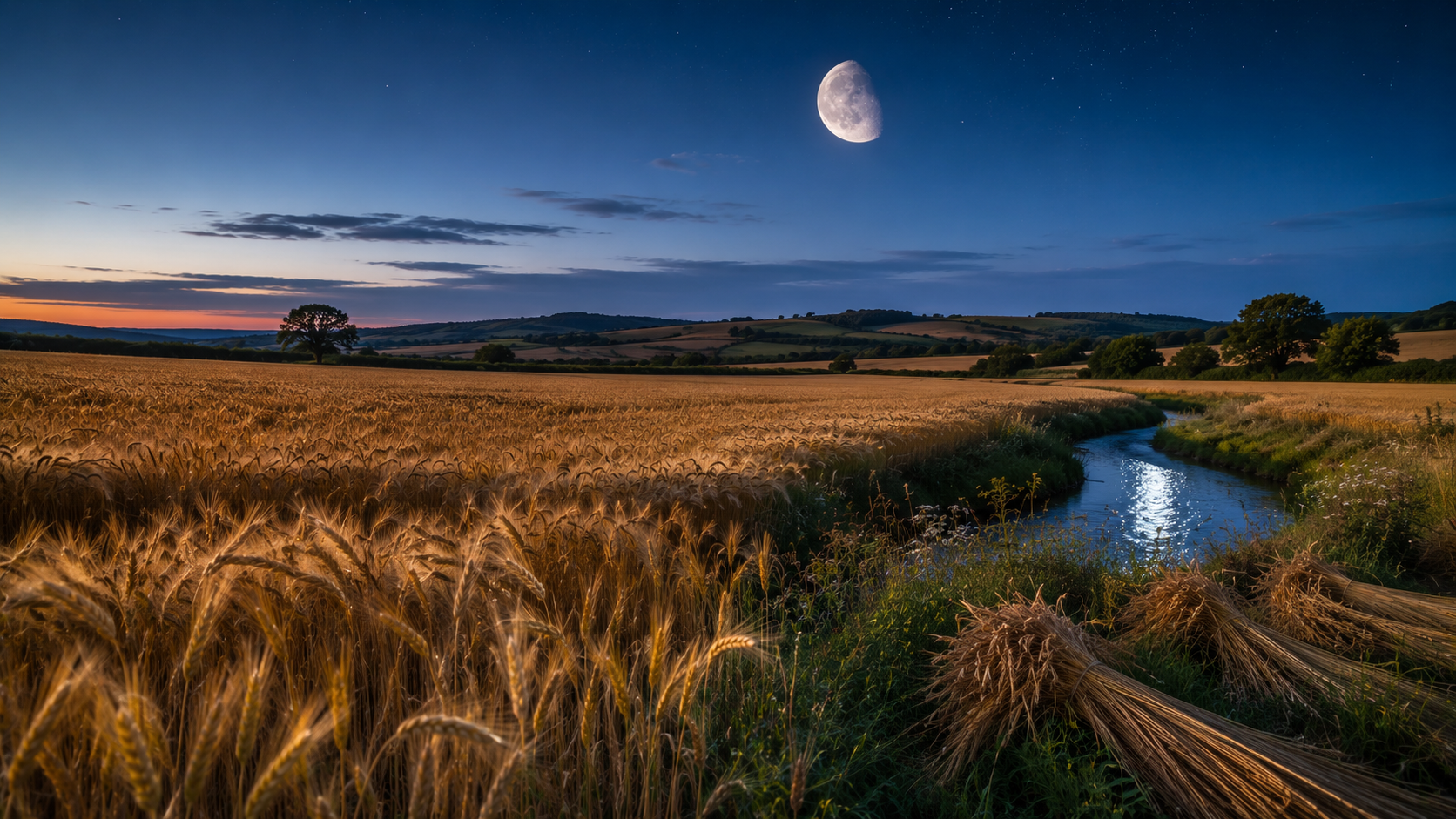
After the brilliance of the full moon, the light begins to soften. The Moon is still large and luminous, but night by night a little more darkness returns.
This is the waning gibbous moon, the first phase after fullness. Symbolically, it is often associated with gratitude, sharing, integration, and giving back: a moment to consider what you have received and what can now move outward again.
Waning Gibbous Moon at a Glance
- Illumination: more than 50% and decreasing
- Position in the cycle: after the full moon and before the last quarter moon
- Skywatching: rises later than the full moon and can often be seen in the morning sky
- Symbolic themes: gratitude, generosity, integration, reciprocity
- Simple practice: identify something you have received and find one meaningful way to pass value onward
What Is a Waning Gibbous Moon?
The waning gibbous appears immediately after the full moon and lasts until the last quarter phase. During this period, more than half of the lunar disk remains illuminated from our viewpoint, but the visible illuminated portion becomes smaller each night.
“Waning” means decreasing, while “gibbous” describes a Moon that appears more than half illuminated but not full. The Moon itself is not losing light; half is always illuminated by the Sun. Lunar phases describe how much of that sunlit half we can see from Earth as the Moon orbits us.
Waning Gibbous Moon Meaning
Modern lunar traditions commonly associate the waning gibbous with gratitude, reflection, sharing, and integration. These are symbolic associations rather than scientifically demonstrated effects of the Moon on personal outcomes.
The metaphor begins with fullness. The waxing half of the cycle moves toward gathering and culmination. Once the Moon passes full, the direction changes. Instead of immediately framing that change as loss, the waning gibbous can represent the moment after the harvest basket is filled: some of what we gathered nourishes us, some can nourish others, and some becomes seed for another season.
Waning Gibbous Ritual: Turn Gratitude Into Action
A waning gibbous ritual can be simple. You do not need special tools; a notebook and a few quiet minutes are enough.
- Name what you received. Think about support, knowledge, food, time, opportunity, encouragement, or another form of abundance that reached you recently.
- Notice what it changed. What became easier, richer, clearer, or more possible because of it?
- Choose what can circulate. Share a resource, teach something you learned, help someone with a task, offer encouragement, or give away something you genuinely have enough of.
- Let gratitude become participation. Take one concrete action rather than leaving appreciation only on the page.
Candles, tarot cards, crystals, tea, or other ritual objects can be included if they help you focus, but they are optional.
Reciprocity in Nature
Nature offers countless images for this phase. Flowers provide nectar or pollen while pollinators help many plants reproduce. Fruit can feed animals that disperse seeds. Fallen leaves are broken down by decomposers and become part of the nutrient cycle. Gardeners echo that process when they compost suitable scraps and return organic matter to the soil.
None of these systems is a perfect moral metaphor, and nature is not consciously practicing gratitude. But they illustrate something real and useful: living systems are interconnected, and materials, energy, and resources continually move between organisms and environments.
Simple Ways to Observe the Waning Gibbous
- Share something useful. Extra garden produce, seeds, a meal, time, or knowledge can all count.
- Preserve part of a harvest. Save suitable seeds or learn a safe preservation method for seasonal food.
- Compost what is finished. Return appropriate plant and kitchen material to the soil rather than treating everything as waste.
- Thank someone through action. Help with a task, share what you know, cook something, write a note, or simply make time.
- Look for the Moon in the morning. As the waning gibbous rises later each night, it can remain visible after sunrise.
Waning Gibbous Journal Prompts
- What have I received that I can now pass along?
- What lesson from this lunar cycle is worth carrying forward?
- Where do I have enough to be generous without depleting myself?
- How can I express gratitude through action rather than words alone?
How “The Fields Return Their Song” Echoes the Waning Gibbous
The Fields Return Their Song begins after fullness. The harvest has not disappeared, but the emotional direction has changed: what was gathered begins moving outward again.
The song uses fields, roots, trees, rivers, and the sea to imagine gratitude moving through a landscape. Scientifically, those parts of nature are not consciously offering thanks. Poetically, however, the imagery reflects real interconnected systems—water circulates, nutrients move through food webs, seeds travel, and one season’s growth can help support another.
That is the song’s connection to this phase: abundance does not have to stop with the person who receives it. What was given can move again.
Listen to “The Fields Return Their Song”
Frequently Asked Questions
What does the waning gibbous moon symbolize?
Modern lunar traditions commonly associate it with gratitude, sharing, reflection, integration, and giving back. These meanings are symbolic rather than scientifically established lunar effects.
How long does the waning gibbous moon last?
It lasts from the full moon until the last quarter moon, roughly one week, with slight variation from cycle to cycle.
When can you see a waning gibbous moon?
A waning gibbous rises after sunset, progressively later as the phase advances. It is visible during the late night and morning and can often still be seen after sunrise.
What should I do during the waning gibbous moon?
If you use lunar phases as symbolic checkpoints, consider reflecting on what you have gained, integrating recent lessons, expressing gratitude, and sharing something useful with another person or your community.
Bring the Practice Home
As an Amazon Associate, Rhythm Rielly earns from qualifying purchases at no additional cost to you.
If this phase inspires practical reciprocity, a seed-saving guide can help carry one garden season into the next, while a beginner composting guide can help turn suitable household and garden material into future soil. For reflection, a simple nature and gratitude journal is plenty.
Continue Through the Lunar Cycle
As the illuminated half continues shrinking, the lunar cycle reaches another turning point. Continue to the last quarter moon, traditionally associated with release, reassessment, and clearing space.
Or return to the complete Moon phases guide to explore the entire cycle.
Leave a Reply