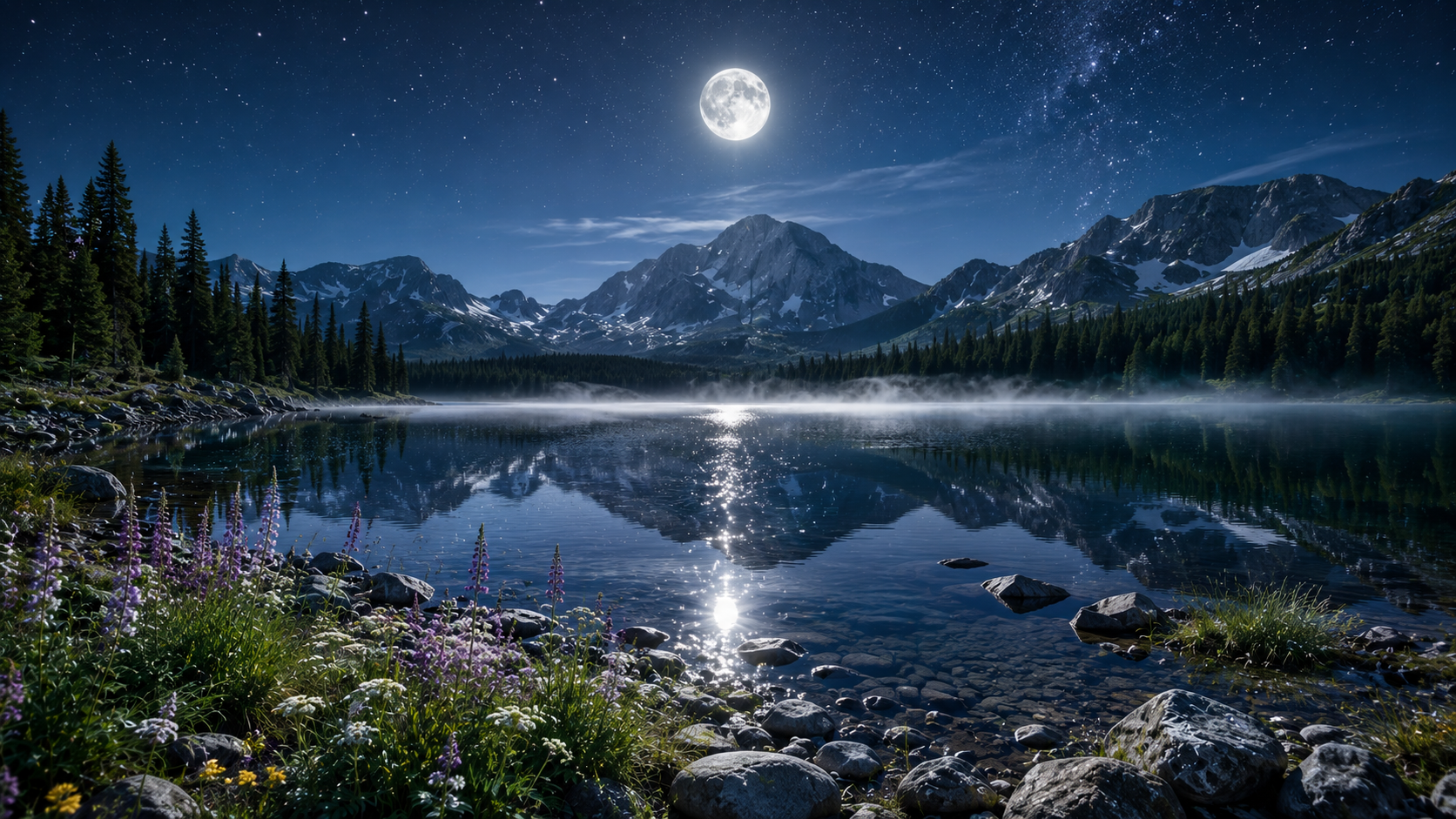
The full moon is the luminous midpoint of the lunar cycle: the moment when the Moon’s Earth-facing side appears almost completely illuminated.
Symbolically, the full moon is often associated with illumination, culmination, gratitude, and recognition. After the preparation of the waxing gibbous moon, it offers a natural checkpoint for noticing what has grown before the cycle begins to wane.
Full Moon at a Glance
- Illumination: nearly 100%
- Skywatching: rises around sunset and sets around sunrise
- Symbolic themes: illumination, completion, gratitude, celebration
- Simple practice: look back at what has changed since the new moon and recognize what deserves appreciation
What Is a Full Moon?
A full moon occurs when the Moon is on the side of Earth opposite the Sun. From our viewpoint, sunlight illuminates nearly the entire lunar hemisphere facing Earth, producing the familiar bright disk.
The Moon does not create visible light of its own; it reflects sunlight. Because a full moon is roughly opposite the Sun in our sky, it typically rises around sunset, remains visible through much of the night, and sets around sunrise.
Full Moon Meaning
Across modern lunar practices, the full moon is commonly treated as a symbol of culmination, clarity, gratitude, and celebration. These are cultural and symbolic associations rather than scientifically demonstrated effects of the Moon on personal outcomes.
The metaphor is simple: at the brightest point of the cycle, more becomes visible. A project may have taken shape, a habit may have survived its difficult beginning, or an intention may have changed completely. The full moon can serve as a reminder to notice the result before immediately chasing the next thing.
Full Moon Ritual for Gratitude and Reflection
A full moon ritual does not need to be elaborate. A notebook, a few quiet minutes, and an honest look at the previous weeks are enough.
- Look back. What has changed since the new moon?
- Name what grew. Recognize progress even when it is smaller or different than expected.
- Practice gratitude. Write down what supported you, including people, opportunities, ordinary comforts, and your own effort.
- Notice what feels complete. Decide what can be celebrated, finished, or allowed to become “enough.”
Candles, crystals, tarot cards, tea, or other ritual objects can be used if they help create focus, but none are required.
Why the Full Moon Invites Gratitude
Growth rarely happens all at once. A flower prepares before it blooms; fruit ripens through many small changes; a creative project accumulates through ordinary sessions that may not feel important at the time.
Completion is not permanent, either. Almost immediately after fullness, the Moon begins waning. That makes the full moon less a finish line than a visible moment inside a larger cycle—a chance to recognize what exists before change continues.
Simple Ways to Celebrate the Full Moon
- Watch the moonrise from a safe place with a clear eastern horizon.
- Take a moonlit walk on a safe, familiar route.
- Share a seasonal meal with someone you care about.
- Write down three things that have quietly improved since the previous new moon.
- Celebrate something that is good enough without demanding that it become perfect.
Full Moon Journal Prompts
- What has quietly grown in my life that deserves recognition?
- What became clearer during this lunar cycle?
- Who or what helped me reach this point?
- What can I appreciate without needing to hold onto forever?
How “Silver Over Everything” Echoes the Full Moon
Silver Over Everything arrives at the brightest point of the lunar cycle, but its central idea is recognition rather than brightness alone. Full moonlight changes how a familiar landscape appears: fields regain their shape, water catches reflections, and distant trees emerge against the horizon.
Nothing new has appeared simply because the light reached it. The light helps us notice what was already there. That is the song’s connection to the full moon: remembering the seeds, roots, difficult ground, and patient work that preceded the visible moment.
Listen to “Silver Over Everything”
Frequently Asked Questions
What does the full moon symbolize?
Modern lunar traditions commonly associate the full moon with illumination, culmination, gratitude, clarity, and celebration. These are symbolic associations rather than scientifically established lunar effects.
How long does a full moon last?
Astronomically, the full moon is a specific moment. To the eye, however, the Moon can appear essentially full for roughly a night or two around that moment.
When does the full moon rise?
A full moon generally rises around sunset and sets around sunrise, although exact local times vary by date and location.
What should I do during a full moon?
If you use the lunar cycle symbolically, the full moon can be a useful time to reflect on progress, practice gratitude, celebrate completion, and notice what has become clearer.
Bring the Full Moon Outdoors
As an Amazon Associate, Rhythm Rielly earns from qualifying purchases at no additional cost to you.
If the full moon inspires you to spend more time outside, a pair of beginner stargazing binoculars or a moon phase field guide can make skywatching more rewarding. For reflection, a simple moon and nature journal is enough—there is no need to buy ritual supplies to participate in the practice.
Continue Through the Lunar Cycle
After fullness, the visible light begins to decrease. Continue to the waning gibbous moon, a phase associated with gratitude, sharing, and integration.
Or return to the complete Moon phases guide to explore the entire lunar cycle.
Leave a Reply