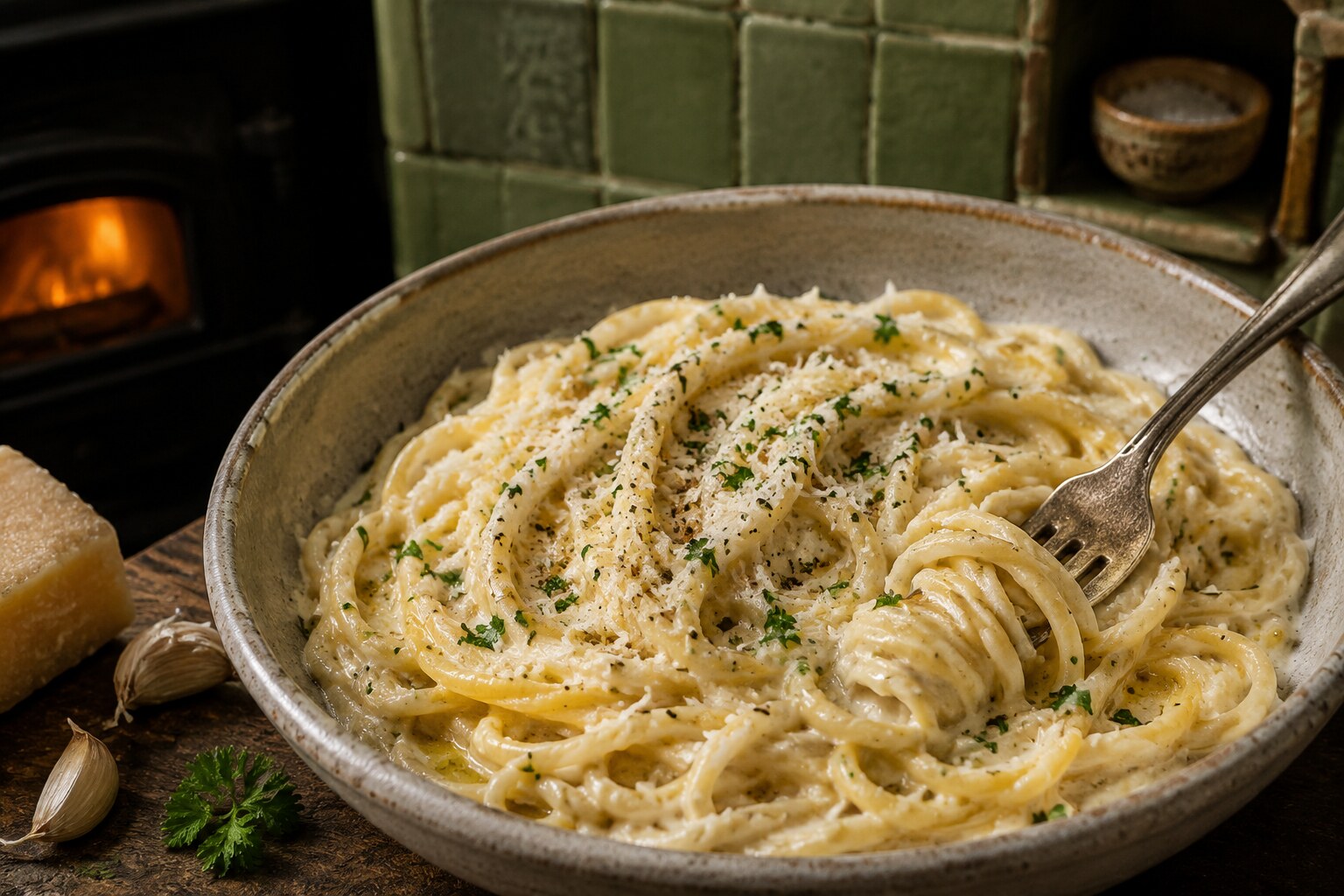
Creamy Greek yogurt pasta is what to make when dinner needs to feel comforting but the refrigerator is offering only a few ordinary things. Greek yogurt, Parmesan, garlic, black pepper, and starchy pasta water become a silky sauce in about 25 minutes—without heavy cream.
The method matters more than the ingredient list. Greek yogurt should never meet a fiercely hot pan. Temper it gradually with pasta water, then toss the noodles with the sauce away from direct heat. That small pause is the difference between smooth, glossy pasta and a sauce that separates.
This recipe belongs to the growing collection of easy recipes with Greek yogurt. Pair it with a simple salad or roasted vegetables, then save the remaining yogurt for Greek yogurt ranch dip or tomorrow morning’s blueberry muffins.
Why Greek yogurt makes a good pasta sauce
Greek yogurt brings creaminess and a gentle tang, while Parmesan supplies savory depth. Starchy pasta water loosens the yogurt and helps the sauce cling to every strand. Olive oil rounds out the acidity, and black pepper keeps the finished dish from tasting flat.
Use plain whole-milk or 2% Greek yogurt for the smoothest sauce. Nonfat yogurt can work, but it is more prone to looking grainy and has less richness to soften the garlic and cheese. Whatever you choose, let it sit at room temperature while the pasta water heats so it is not refrigerator-cold when you temper it.
Ingredients
- 8 ounces linguine, spaghetti, or another pasta
- ¾ cup plain Greek yogurt, preferably whole-milk or 2%
- ½ cup finely grated Parmesan, plus more for serving
- 1 small clove garlic, finely grated
- 1 tablespoon extra-virgin olive oil
- ½ teaspoon freshly ground black pepper, plus more for serving
- ¼ teaspoon fine salt, plus salt for the pasta water
- ½–1 cup reserved hot pasta water
- 2 tablespoons chopped flat-leaf parsley, optional
How to make creamy Greek yogurt pasta
1. Bring the yogurt closer to room temperature
Measure the Greek yogurt into a large heatproof mixing bowl before you start cooking. Letting it lose its refrigerator chill makes tempering gentler and reduces the sudden temperature change that can cause separation.
2. Cook the pasta
Bring a pot of well-salted water to a boil. Add the pasta and cook until just al dente according to the package directions. The noodles will soften slightly more while they are tossed with the warm sauce.
3. Build the yogurt base
While the pasta cooks, whisk the yogurt with the finely grated Parmesan, garlic, olive oil, black pepper, and ¼ teaspoon salt. Finely grated cheese melts more evenly than large shreds and gives the sauce a smoother finish.
4. Reserve and temper
Before draining the pasta, scoop out 1 cup of its starchy cooking water. Slowly drizzle about ½ cup of the hot water into the yogurt mixture while whisking constantly. The sauce should loosen and become glossy. This gradual warming is the most important step.
5. Toss away from the heat
Drain the pasta and add it directly to the bowl. Toss vigorously with tongs until every strand is coated. Add more pasta water, one tablespoon at a time, until the sauce is silky and a little looser than you think it needs to be—it thickens as it stands.
Taste and adjust the salt and pepper. Finish with parsley, another veil of Parmesan, and a small thread of olive oil. Serve immediately.
The no-curdling rule
Do not boil Greek yogurt sauce. High heat causes the milk proteins to tighten and separate from the liquid, leaving a grainy or broken texture. Tempering raises the yogurt’s temperature slowly; tossing off the burner keeps it below the point where it is likely to split.
- Start with yogurt that is not ice-cold.
- Add hot pasta water slowly while whisking.
- Combine the sauce and noodles in a bowl or a pan removed from the burner.
- Never return the finished sauce to a boil.
- Serve promptly, because the sauce thickens as it cools.
Choosing the best pasta shape
Long noodles such as linguine, spaghetti, or bucatini make the sauce feel especially silky because it coats the strands. Short ridged shapes—rigatoni, fusilli, or penne—hold the sauce in their grooves and are easier to mix with vegetables. Use what you have, but avoid overcooking it: a little bite gives this simple sauce structure.
Easy variations
- Lemon and herb: Add the finely grated zest of half a lemon and finish with parsley, dill, or chives.
- Spinach: Add 2 packed cups baby spinach to the hot drained pasta and toss until wilted before adding the yogurt sauce.
- Peas: Add 1 cup frozen peas to the pasta pot for the final 2 minutes of cooking.
- Mushroom: Brown sliced mushrooms separately and fold them in at the end.
- Chicken: Top with sliced cooked chicken or serve beside Greek yogurt chicken salad for an easy lunch spread.
- Red pepper: Add a pinch of crushed red pepper with the black pepper.
- Extra green: Stir in chopped parsley, basil, or fresh chives just before serving.
Substitutions
- Pecorino Romano for Parmesan: Use a little less at first because Pecorino is saltier and sharper.
- Garlic powder for fresh garlic: Use ¼ teaspoon for a softer, less pungent flavor.
- Gluten-free pasta: It works, but reserve extra pasta water; some gluten-free varieties release less starch than wheat pasta.
- Regular plain yogurt: Strain it until thick before measuring. Thin yogurt produces a looser sauce and separates more easily.
- No herbs: Leave them out. Parmesan, garlic, and pepper are enough to carry the dish.
Troubleshooting Greek yogurt pasta sauce
Why is my sauce too thick?
Add reserved pasta water one tablespoon at a time and toss vigorously. The sauce continues to tighten as the pasta absorbs moisture, so it should look slightly loose when it first reaches the bowl.
Why is the sauce grainy?
The yogurt may have been overheated, or the cheese may have been too coarsely grated. Move the pasta away from direct heat and stir in a splash of warm—not boiling—pasta water. It may not become perfectly smooth again, but the texture will soften.
Why does it taste too tangy?
Add a little more Parmesan, a teaspoon of olive oil, or a small knob of butter. Whole-milk yogurt is naturally rounder and less sharp than nonfat yogurt. Salt also matters: a properly seasoned sauce tastes creamy rather than simply sour.
Why did the sauce turn watery?
Too much pasta water added at once can dilute the sauce. Keep tossing for a minute; the noodles and cheese will absorb some of the liquid. If needed, add another spoonful of finely grated Parmesan—still away from direct heat.
What to serve with it
This pasta is rich enough to feel comforting but mild enough to sit beside almost anything green: roasted broccoli, garlicky green beans, peas, asparagus, or a lemony salad. Warm two-ingredient Greek yogurt flatbread is excellent for gathering the last of the sauce from the bowl.
Storage and reheating
Greek yogurt pasta is best immediately, when the sauce is fluid and glossy. Refrigerate leftovers in a covered container for up to 3 days. The noodles will absorb sauce and firm as they chill.
To reheat, place the pasta in a skillet over low heat with a splash of water or milk. Stir gently and remove it from the heat as soon as it is warm. A microwave also works in short intervals at reduced power. Avoid high heat in either method, since boiling can separate the yogurt.
Frequently asked questions
Does Greek yogurt taste sour in pasta?
It adds a pleasant tang, but Parmesan, olive oil, garlic, and pasta water balance it. Whole-milk Greek yogurt tastes milder and creamier than nonfat yogurt.
Can I make the sauce ahead?
You can whisk together the cold yogurt, Parmesan, garlic, oil, salt, and pepper a few hours ahead and refrigerate it. Bring it toward room temperature while the pasta cooks, then temper it with freshly reserved pasta water just before tossing.
Can I use this sauce for macaroni?
Yes. Short pasta holds the creamy sauce well. Begin with slightly less pasta water because smaller shapes can carry more water from the pot when drained.
Creaminess without heaviness
This is less an imitation of cream sauce than its own useful little spell: cool yogurt warmed carefully, sharp cheese softened by starch, and an ordinary pot of noodles becoming something glossy and generous. The trick is simply knowing when to remove the heat.
Leave a Reply