Bake With the Seasons · March
March is a month of first color: green returning to the garden, blossoms beginning to open, and the kitchen slowly moving away from winter’s heavier flavors. This pistachio rose cake belongs right in that threshold. Ground pistachios give the crumb richness and a naturally muted green-gold color, while rose water adds a floral note that should feel like fragrance rather than perfume.
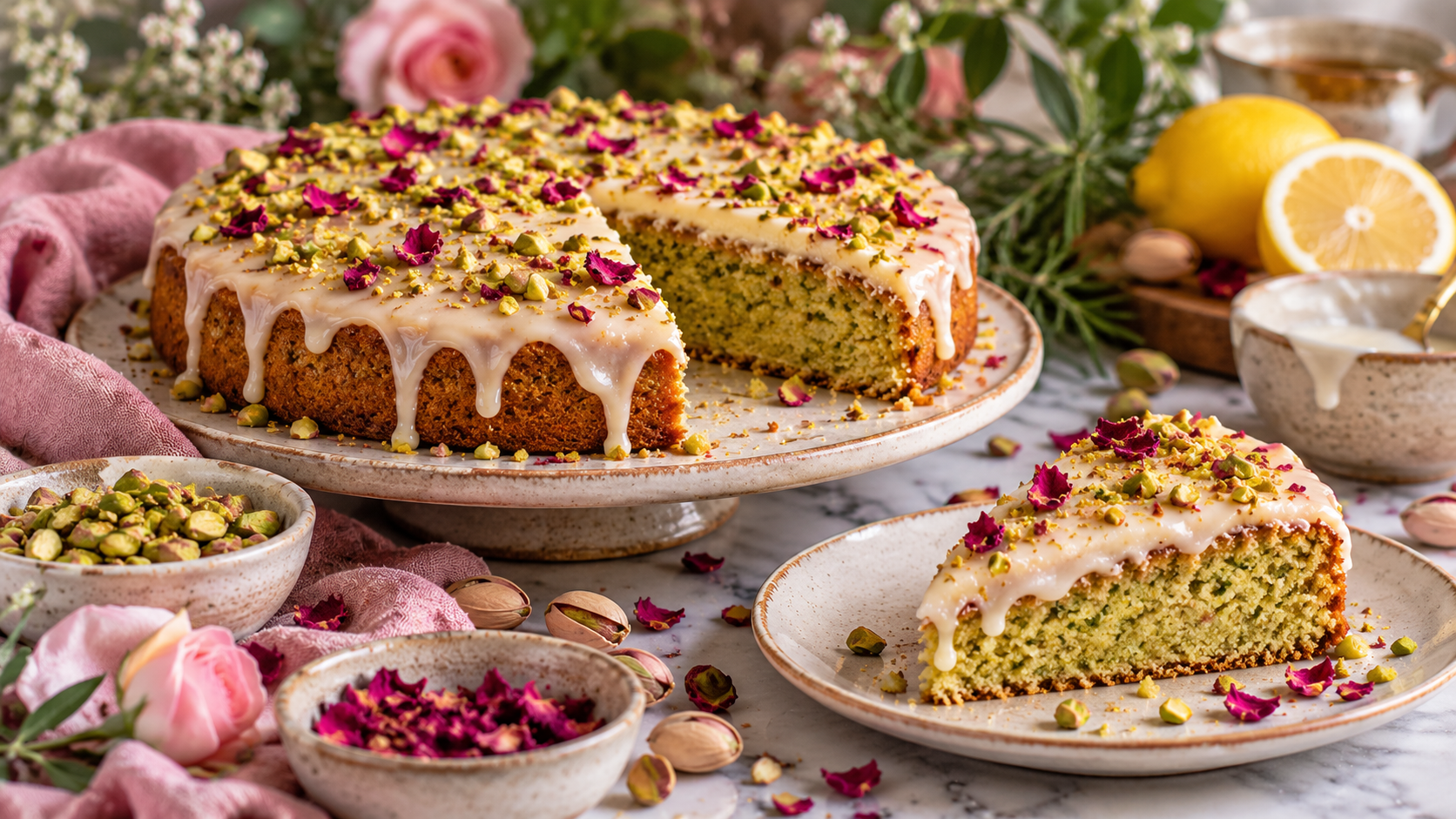
A little lemon zest keeps everything bright, and Greek yogurt helps the cake stay tender for days. The finished cake needs very little decoration—chopped pistachios, a restrained glaze, and a scattering of edible rose petals if you have them.
The secret to baking with rose water
Rose water is powerful. Used carefully, it gives a dessert an almost elusive floral aroma; used heavily, it can overwhelm every other flavor. Start with 1 teaspoon in this cake. If your rose water is especially concentrated, use a little less.
Be sure you’re using food-grade rose water intended for cooking. Cosmetic rose products are not interchangeable with culinary rose water.
Ingredients
For the cake
- 1 cup (125 g) shelled unsalted pistachios
- 1 1/4 cups (150 g) all-purpose flour
- 1 1/2 teaspoons baking powder
- 1/4 teaspoon baking soda
- 1/2 teaspoon fine salt
- 3/4 cup (150 g) granulated sugar
- Finely grated zest of 1 lemon
- 2 large eggs, room temperature
- 3/4 cup (180 g) plain Greek yogurt
- 1/2 cup (113 g) unsalted butter, melted and cooled slightly
- 1 teaspoon food-grade rose water
- 1 teaspoon vanilla extract
For the optional lemon-rose glaze
- 3/4 cup powdered sugar
- 1 to 2 tablespoons fresh lemon juice
- A few drops rose water, optional
- 2 tablespoons chopped pistachios
- Food-grade dried rose petals, optional
How to make pistachio rose cake
1. Grind the pistachios
Heat the oven to 350°F. Grease an 8-inch round cake pan and line the bottom with parchment. Pulse the pistachios in a food processor until finely ground, stopping before they turn into pistachio butter. A few slightly larger flecks are welcome.
2. Mix the dry ingredients
Whisk the ground pistachios with the flour, baking powder, baking soda, and salt. Breaking up any clumps now helps the nuts disperse evenly through the cake.
3. Rub the lemon into the sugar
In a large bowl, rub the lemon zest into the sugar with your fingertips until fragrant and slightly damp. This releases the citrus oils and gives the cake a brighter lemon aroma without adding excess liquid.
4. Finish the batter
Whisk the eggs into the lemon sugar until smooth. Add the Greek yogurt, melted butter, rose water, and vanilla. Fold in the dry ingredients just until no dry streaks remain. Avoid overmixing.
5. Bake
Spread the batter evenly in the prepared pan. Bake for 32 to 40 minutes, until the center springs back lightly and a tester inserted near the middle comes out with a few moist crumbs rather than wet batter.
Cool in the pan for about 15 minutes, then turn the cake onto a rack and let it cool completely before glazing.
6. Glaze lightly
Whisk the powdered sugar with enough lemon juice to make a thick but pourable glaze. If you want another whisper of rose, add only a few drops of rose water. Spoon the glaze over the cooled cake and finish with chopped pistachios and, if desired, a small scattering of culinary rose petals.
What should pistachio rose cake taste like?
Pistachio should lead. The cake is nutty, buttery, and gently tangy from the yogurt, with lemon lifting the richer flavors. Rose belongs in the background, becoming more noticeable in the aroma than as a strong flavor on the tongue.
If you’re uncertain about floral desserts, omit rose water from the glaze and use it only in the batter. You’ll still get the character of the pairing without doubling the floral note.
Troubleshooting
- The cake is heavy: Grind the pistachios finely, measure the flour carefully, and stop mixing as soon as the batter is combined.
- The rose is too strong: Rose waters vary in concentration. Reduce it next time and let pistachio and lemon do more of the work.
- The cake browned before the center finished: Loosely tent the top with foil for the final 10 minutes.
- The glaze disappeared into the cake: Wait until the cake is completely cool before glazing.
Easy variations
- Orange pistachio: Replace lemon zest and juice with orange.
- Cardamom: Add 1/4 teaspoon ground cardamom to the dry ingredients for a warmer aromatic layer.
- No rose: Leave out the rose water entirely for a simple lemon-pistachio yogurt cake.
- Loaf version: Bake in a greased and lined 8 1/2-by-4 1/2-inch loaf pan, allowing additional baking time as needed.
Storage
Store the unglazed or glazed cake tightly covered at room temperature for up to 2 days, or refrigerate for longer storage. Because refrigeration firms the butter, let chilled slices sit at room temperature before serving for the softest texture.
A cake for the beginning of spring
Pistachio and rose make this cake feel celebratory without requiring elaborate decoration. Its colors are naturally soft rather than neon: pale green-gold crumb, creamy glaze, scattered green nuts, and just a few pink petals. It looks like the first hints of spring rather than a bakery display trying too hard.
More March baking
Continue the Bake With the Seasons March collection with Rhubarb Vanilla Custard Bars, Pineapple Coconut Upside-Down Cake, Carrot Cardamom Pistachio Loaf, and Lemon Rosemary Shortbread.
Leave a Reply