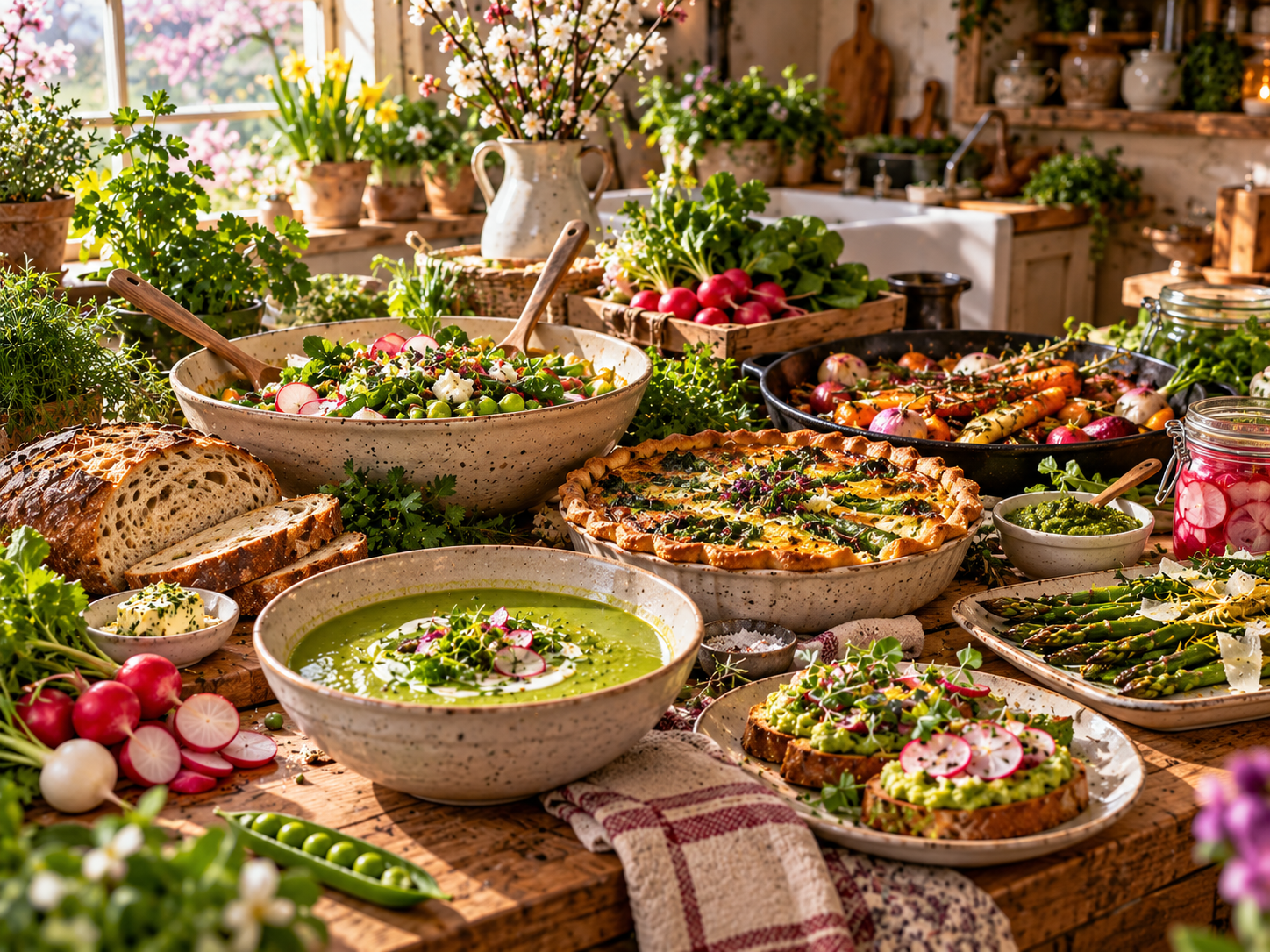
March is the month when the seasonal kitchen begins to turn green again. Winter has not disappeared everywhere, but the balance is shifting. Tender leaves, radishes, herbs, spring onions and peas begin appearing in mild gardens and protected spaces, while gardeners in colder regions are sowing the crops that will fill their kitchens a little later.
This is not quite the overflowing abundance of summer. March cooking is lighter and scrappier than that. A handful of herbs matters. Radish tops become dinner. The first bowl of homegrown lettuce feels extravagant. Stored potatoes, onions and preserved foods are still useful, but fresh growth is finally becoming part of the meal again.
What is seasonal in the March kitchen?
March harvests vary widely by climate. Mild regions may have lettuce, spinach, arugula, kale, chard, radishes, peas, carrots, beets, broccoli, herbs and green onions. In colder regions, many of these foods are only beginning under cover or indoors, so stored roots, cabbage, onions, garlic, frozen vegetables and preserved harvests can still bridge the gap. Think of March less as a fixed ingredient list and more as the first exchange between winter stores and new spring growth.

1. Spring Pea, Lemon & Herb Pasta
Serves 4–6
Ingredients
- 12 oz pasta
- 2 cups peas, fresh where available or frozen
- 2 tablespoons butter or olive oil
- 2 garlic cloves, minced
- Zest and juice of 1 lemon
- 1/2 cup grated Parmesan
- 1/2 cup chopped parsley, mint, dill or a mixture
- Salt and black pepper
Instructions
- Cook pasta until al dente, adding peas during the final 2–3 minutes. Reserve 1 cup pasta water and drain.
- Return the pot to low heat with butter or olive oil and garlic. Cook about 30 seconds.
- Add pasta, peas, lemon zest, lemon juice and Parmesan. Toss with enough pasta water to create a silky sauce.
- Fold in fresh herbs and season to taste.
2. Crispy Radish & Potato Breakfast Hash
Serves 4
Ingredients
- 1 lb potatoes, diced small
- 1 bunch radishes, quartered
- 1 small onion, diced
- 2 tablespoons olive oil
- 1/2 teaspoon smoked paprika
- Salt and black pepper
- 4 eggs, optional
- Chopped chives or parsley for serving
Instructions
- Heat olive oil in a large skillet over medium heat. Add potatoes and cook, stirring occasionally, until nearly tender.
- Add onion, radishes, paprika, salt and pepper. Cook until the vegetables are browned and crisp at the edges.
- If using eggs, make four wells in the hash, crack in the eggs, cover and cook until set to your liking.
- Finish with fresh herbs.
3. Garden Greens, White Bean & Lemon Soup
Serves 6
Ingredients
- 2 tablespoons olive oil
- 1 onion or 2 leeks, chopped
- 3 garlic cloves, minced
- 2 15-oz cans white beans, drained and rinsed
- 6 cups broth
- 5 cups chopped spinach, kale, chard or mixed greens
- 1 teaspoon dried thyme
- Juice of 1 lemon
- Salt and black pepper
Instructions
- Cook onion or leeks in olive oil until soft. Add garlic and thyme and cook 30 seconds.
- Add beans and broth and simmer for 15 minutes.
- Stir in greens and cook just until tender.
- Finish with lemon juice, salt and pepper.
4. Roasted Carrot & Herbed Yogurt Flatbreads
Serves 4
Ingredients
- 1 lb carrots, sliced lengthwise
- 1 tablespoon olive oil
- 1 teaspoon honey
- 1/2 teaspoon ground cumin
- 1 cup plain Greek yogurt
- 1 tablespoon lemon juice
- 1/3 cup chopped dill, parsley or mint
- 4 flatbreads or naan
- Salt and black pepper
Instructions
- Heat oven to 425°F. Toss carrots with olive oil, honey, cumin, salt and pepper and roast 20–30 minutes until browned.
- Mix yogurt with lemon juice, herbs and a pinch of salt.
- Warm flatbreads, spread with herbed yogurt and top with roasted carrots.
- Finish with extra herbs or a squeeze of lemon.
5. Spinach, Green Onion & Cheddar Frittata
Serves 6
Ingredients
- 8 eggs
- 1/3 cup milk
- 1 tablespoon olive oil
- 4 green onions, sliced
- 4 cups fresh spinach
- 1 cup shredded cheddar
- Salt and black pepper
Instructions
- Heat oven to 375°F. Whisk eggs, milk, salt and pepper.
- Heat olive oil in an oven-safe skillet. Cook green onions briefly, add spinach and cook until wilted.
- Pour in eggs and scatter cheddar over the top.
- Cook 2–3 minutes on the stovetop, then transfer to the oven for 12–16 minutes until just set.
6. Radish-Top Pesto
Makes about 1 cup
Ingredients
- 2 packed cups fresh, healthy radish leaves, thoroughly washed
- 1/3 cup toasted walnuts, sunflower seeds or almonds
- 1/3 cup grated Parmesan
- 1 garlic clove
- 1 tablespoon lemon juice
- 1/3–1/2 cup olive oil
- Salt and black pepper
Instructions
- Place radish leaves, nuts or seeds, Parmesan, garlic and lemon juice in a food processor.
- Pulse while gradually adding olive oil until the pesto reaches your preferred consistency.
- Season to taste. Refrigerate promptly and use within a few days, or freeze in small portions.
Harvest rescue: Radishes are one of spring’s quickest crops, and their tender, undamaged leaves are edible too. Using the tops turns one small harvest into two ingredients.
7. Lemon, Honey & Herb Yogurt Cake
Makes one 9-inch cake
Ingredients
- 1 1/2 cups all-purpose flour
- 1 1/2 teaspoons baking powder
- 1/2 teaspoon salt
- 2 eggs
- 3/4 cup plain Greek yogurt
- 1/2 cup honey
- 1/3 cup neutral oil
- Zest of 1 lemon
- 2 tablespoons lemon juice
- 1 tablespoon finely chopped fresh rosemary or thyme, optional
Instructions
- Heat oven to 350°F and grease a 9-inch round pan.
- Whisk flour, baking powder and salt.
- In another bowl whisk eggs, yogurt, honey, oil, lemon zest and juice.
- Fold dry ingredients into wet just until combined. Fold in the herb if using.
- Bake 30–40 minutes until a tester inserted in the center comes out clean.
8. Pea, Spinach & Herb Rice Bowls
Serves 4
Ingredients
- 3 cups cooked rice
- 1 1/2 cups peas, fresh where available or frozen
- 3 cups spinach
- 1 tablespoon olive oil
- 2 green onions, sliced
- 1/2 cup chopped fresh herbs
- Juice of 1 lemon
- 4 eggs, chickpeas or another protein of choice
- Salt and black pepper
Instructions
- Heat olive oil in a skillet. Add green onions, peas and spinach and cook until tender.
- Stir in rice and warm through.
- Add herbs, lemon juice, salt and pepper.
- Divide among bowls and top with eggs, chickpeas or your preferred protein.
9. Quick-Pickled Spring Radishes
Makes 1 pint
Ingredients
- 1 bunch radishes, thinly sliced
- 1/2 cup vinegar
- 1/2 cup water
- 1 tablespoon sugar
- 1 1/2 teaspoons salt
- Optional: peppercorns, dill, garlic or mustard seed
Instructions
- Pack radishes and optional seasonings into a clean pint jar.
- Warm vinegar, water, sugar and salt just until dissolved.
- Pour over radishes, cool, cover and refrigerate.
- Let the flavors develop for several hours before eating.
Preservation note: These are refrigerator pickles, not a shelf-stable canned product. Keep them refrigerated.
10. Spring Garden Pot Pie with Greens & Peas
Serves 6
Ingredients
- 2 tablespoons butter
- 1 leek, cleaned and sliced
- 2 carrots, diced
- 2 tablespoons flour
- 2 cups broth
- 1/2 cup milk
- 1 1/2 cups peas
- 3 cups chopped spinach, kale or chard
- 1 teaspoon thyme
- 1 prepared pie crust or sheet of puff pastry
- Salt and black pepper
Instructions
- Heat oven to 400°F. Melt butter in an oven-safe skillet and cook leek and carrots until beginning to soften.
- Stir in flour and cook for 1 minute. Slowly add broth and milk, stirring until thickened.
- Add peas, greens, thyme, salt and pepper and cook until greens begin to wilt.
- Top with pie crust or puff pastry, cut a few vents and bake 25–35 minutes until deeply golden and bubbling.
March is the month of small harvests that feel enormous
There is something different about the first handful of food from a waking garden. A basket overflowing in August may be objectively more impressive, but five radishes and a fistful of spinach in March can feel like treasure.
That is the rhythm of early spring cooking: use the whole harvest, notice what is emerging, and let small amounts of fresh food change meals that are still partly built from the pantry.
Planting ahead for the April and May kitchen
March can be one of the busiest planting months of the year, but it is also one of the easiest months to get wrong by following a generic calendar. Your last-frost date, soil temperature and local weather matter more than the word “March” on a seed packet.
- In mild and warm climates: continue sowing fast cool-season crops such as radishes, lettuce, arugula, carrots, beets, cilantro and peas while temperatures allow. As frost risk passes and soil warms, gardeners may begin transitioning toward beans, summer squash and other warm-season crops appropriate to their region.
- In colder climates: March is often prime indoor seed-starting season. Depending on the crop and your last-frost date, tomatoes, peppers, herbs, brassicas and other transplants may be started indoors while hardy crops begin outside only when soil and weather permit.
- Under protection: greenhouses, cold frames and tunnels can carry lettuce, spinach, radishes, herbs and young transplants through unpredictable spring weather. Watch sunny-day temperatures closely; protected spaces can overheat surprisingly quickly.
- For succession harvests: do not sow every radish, lettuce or pea seed at once. Small repeat sowings can spread the harvest and keep the kitchen supplied instead of producing one enormous glut.
March is where planting ahead becomes visible. The radish sown today may be lunch surprisingly soon. The tomato seedling under a light is a promise for summer. Both belong to the same seasonal kitchen.
What comes next?
April brings a fuller spring kitchen: more tender greens, herbs, peas, radishes, spring onions and young roots, with strawberries and other regional spring produce beginning to join the conversation. At the same time, warm-season beds start demanding attention. The garden is no longer merely waking up. It is moving.
Follow the whole edible year: Visit Seasonal Garden Recipes for month-by-month recipes, preserving ideas and what to plant next.
Leave a Reply