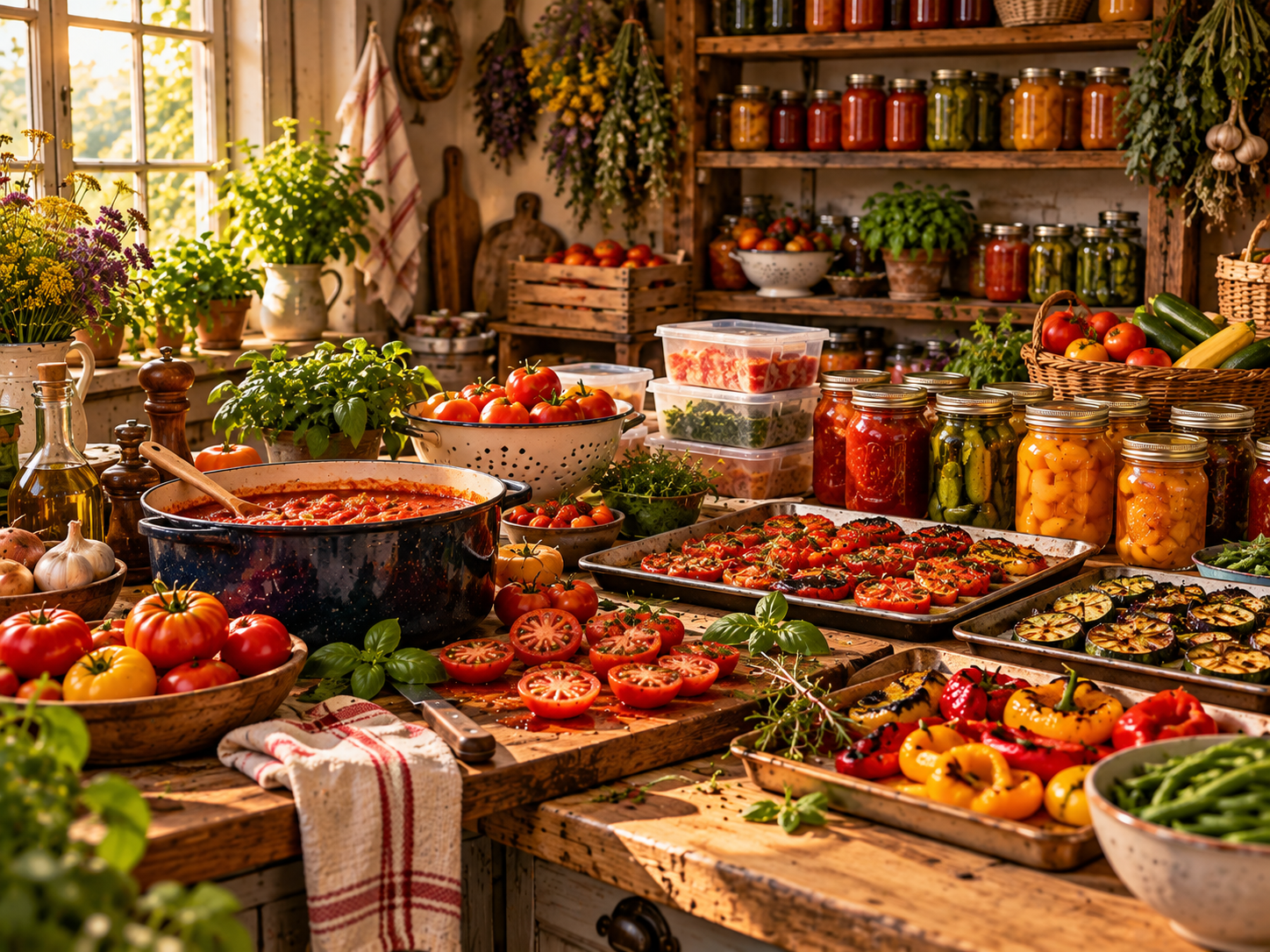
August is the month when the garden can become wonderfully unreasonable. Tomatoes fill bowls faster than they can be eaten. Peppers deepen in color. Cucumbers keep appearing beneath leaves. Basil needs cutting again. Zucchini is still zucchini-ing. In hot gardens, okra and eggplant seem perfectly happy with weather that makes everyone else want to stand in front of the refrigerator.
This is peak-summer cooking, but it is also preservation season. The goal is not to turn every harvest into a major project. Eat the best produce fresh, rescue the gluts with flexible recipes, and preserve manageable amounts in ways you will actually use later.
What is seasonal in the August kitchen?
August gardens commonly offer tomatoes, peppers, cucumbers, zucchini and summer squash, green beans, basil and other herbs. Warm climates may also be producing eggplant, okra, melons and other heat-loving crops. Corn, peaches, plums, berries and additional summer fruit may be abundant regionally. Cooler gardens can be reaching their strongest tomato and pepper production just as the warmest regions begin thinking seriously about fall.
1. Roasted Tomato, Garlic & Basil Pasta Sauce
Makes about 5–6 cups
Ingredients
- 4 lb ripe tomatoes, quartered
- 1 onion, roughly chopped
- 6 garlic cloves
- 3 tablespoons olive oil
- 1 teaspoon salt, plus more to taste
- Black pepper
- 1 packed cup fresh basil
Instructions
- Heat oven to 425°F.
- Spread tomatoes, onion and garlic over rimmed baking sheets. Toss with olive oil, salt and pepper.
- Roast 35–50 minutes until softened, concentrated and browned at the edges.
- Blend or mash to your preferred texture, then stir in basil.
- Use immediately, refrigerate promptly for short-term use, or cool and freeze in meal-size portions.
Preservation note: This is designed as a refrigerator/freezer sauce, not a shelf-stable canning recipe. For home canning, use a current tested formula from a trusted canning authority.
2. Pepper, Corn & Black Bean Skillet
Serves 4–6
Ingredients
- 2 tablespoons oil
- 3 bell or sweet peppers, chopped
- 2 cups corn kernels
- 1 small onion, chopped
- 1 15-oz can black beans, drained and rinsed
- 1 teaspoon cumin
- 1/2 teaspoon smoked paprika
- Juice of 1 lime
- 1/2 cup chopped cilantro or parsley
- Salt and black pepper
Instructions
- Heat oil in a wide skillet. Add peppers, corn and onion and cook over medium-high heat until browned.
- Add black beans, cumin and smoked paprika and cook until hot.
- Finish with lime juice, herbs, salt and pepper.
3. Tomato, Cucumber & Herb Bread Salad
Serves 6
Ingredients
- 4 cups cubed day-old bread
- 4 cups chopped ripe tomatoes
- 2 cucumbers, chopped
- 1/2 red onion, thinly sliced
- 1 packed cup basil, parsley or mixed herbs
- 1/4 cup olive oil
- 2 tablespoons red wine vinegar
- Salt and black pepper
Instructions
- Toast bread cubes lightly if they are still soft.
- Combine tomatoes, cucumber, onion and herbs.
- Add bread, olive oil, vinegar, salt and pepper and toss well.
- Let stand about 15 minutes so the bread absorbs the tomato juices without becoming completely soft.
4. Stuffed Summer Squash Boats
Serves 4–6
Ingredients
- 3 medium-large zucchini or summer squash
- 1 tablespoon olive oil
- 1 small onion, chopped
- 2 cups chopped tomatoes
- 1 15-oz can white beans, drained and rinsed
- 1 cup cooked rice
- 1 teaspoon Italian seasoning
- 1 1/2 cups shredded mozzarella
- Salt and black pepper
Instructions
- Heat oven to 400°F. Halve squash lengthwise and scoop out the seedy centers, leaving sturdy shells.
- Chop usable scooped flesh. Cook onion and chopped squash in olive oil until softened.
- Add tomatoes, beans, rice, seasoning, salt and pepper.
- Fill squash shells, top with cheese and bake 25–35 minutes until squash is tender and topping is browned.
Harvest rescue: This is where the zucchini that got away from you finally finds its purpose.
5. Eggplant, Tomato & Chickpea Sheet-Pan Dinner
Serves 4
Ingredients
- 1 large eggplant, cubed
- 3 cups cherry tomatoes or chopped tomatoes
- 1 15-oz can chickpeas, drained and rinsed
- 1 bell pepper, chopped
- 3 tablespoons olive oil
- 1 teaspoon cumin
- 1/2 teaspoon smoked paprika
- Salt and black pepper
- Fresh parsley or basil
- Plain yogurt and lemon for serving, optional
Instructions
- Heat oven to 425°F.
- Toss eggplant, tomatoes, chickpeas and pepper with olive oil and seasonings.
- Roast 30–40 minutes, stirring once, until vegetables are browned and tender.
- Finish with herbs and serve with yogurt and lemon if desired.
6. Freezer Herb Cubes for Winter Cooking
Makes as much as your herb patch allows
Ingredients
- Fresh basil, parsley, cilantro, dill, chives or other tender culinary herbs
- Olive oil or water
Instructions
- Wash herbs as needed and dry thoroughly.
- Chop finely and pack into ice-cube trays.
- Cover with olive oil for sautéing and sauces, or water for soups and other suitable dishes.
- Freeze solid, transfer cubes to labeled freezer containers and return to the freezer.
These little cubes are one of the easiest ways to turn an unruly August herb patch into useful winter flavor.
7. Peach, Tomato & Basil Toasts
Serves 4
Ingredients
- 8 slices rustic bread
- 2 ripe peaches, sliced
- 2 ripe tomatoes, sliced
- 1 cup ricotta
- 1/2 cup fresh basil
- Olive oil
- Balsamic vinegar or glaze
- Salt and black pepper
Instructions
- Toast bread and spread with ricotta.
- Layer with peaches and tomatoes.
- Top with basil, a drizzle of olive oil and balsamic, salt and black pepper.
8. Crispy Okra, Tomato & Onion Rice Bowls
Serves 4
Ingredients
- 1 lb okra, sliced
- 2 cups chopped tomatoes
- 1 onion, sliced
- 2 tablespoons oil
- 1 teaspoon smoked paprika
- 1/2 teaspoon cumin
- 3 cups cooked rice
- 1 15-oz can black-eyed peas or chickpeas, drained and rinsed
- Salt and black pepper
- Fresh herbs and lemon for serving
Instructions
- Heat oil in a large skillet over medium-high heat. Add okra and let it brown before stirring.
- Add onion, paprika and cumin and cook until softened.
- Add tomatoes and black-eyed peas or chickpeas and cook until hot and slightly saucy.
- Spoon over rice and finish with herbs and lemon.
Seasonal note: In climates where okra is not productive, use green beans, peppers or summer squash instead.
9. Freezer Roasted Pepper Strips
Makes as much as you have peppers
Ingredients
- Sweet or bell peppers
- Olive oil, optional
Instructions
- Heat broiler or oven to high heat.
- Halve and seed peppers. Roast skin-side up until skins blister and blacken in spots.
- Cover briefly so the skins loosen, then peel if desired.
- Slice peppers, cool completely and freeze in meal-size portions on a tray before transferring to freezer containers, or freeze directly in small portions.
Frozen roasted peppers soften after thawing, which makes them especially useful for sauces, soups, eggs, pizza and cooked dishes rather than crisp salads.
10. Everything-in-the-Garden Summer Bake
Serves 6–8
Ingredients
- 6 cups chopped summer vegetables such as zucchini, eggplant, peppers, tomatoes and green beans
- 1 onion, chopped
- 3 garlic cloves, minced
- 2 tablespoons olive oil
- 1 teaspoon Italian seasoning
- 3 cups cooked pasta or rice
- 2 cups shredded mozzarella
- 1/2 cup grated Parmesan
- 1 cup chopped fresh herbs
- Salt and black pepper
Instructions
- Heat oven to 400°F.
- Toss vegetables, onion and garlic with olive oil, seasoning, salt and pepper. Roast until the vegetables lose some moisture and begin to brown.
- Combine roasted vegetables with cooked pasta or rice, half the mozzarella, Parmesan and herbs.
- Transfer to a baking dish, top with remaining mozzarella and bake until bubbling and browned.
This is not a recipe that requires six specific vegetables. It is a place to put whatever August gave you too much of.
August is about deciding what deserves to become winter
Preservation can become its own kind of pressure. A garden overflowing with food can make it feel as though wasting a single tomato is a moral failure. It is not.
Preserve what your household will actually eat. Freeze the tomato sauce you know you will use. Save basil because February pesto will make you happy. Roast and freeze peppers because they disappear easily into dinner. Give the rest away, trade it with a neighbor, or compost what genuinely gets past you.
The purpose of preservation is not to win against the garden. It is to let a little summer follow you into another season.
Planting ahead for the September and autumn kitchen
August is both peak summer and the beginning of the cool-season garden in many regions. The exact timing depends on summer heat and first-frost dates, but autumn food often has to be planted long before autumn weather arrives.
- In hot and warm climates: begin or continue planning fall beds while summer crops remain productive. Brassicas may be started in protected conditions, and carrots, beets, radishes, lettuce, cilantro and other cool-season crops can be timed for when soil temperatures become more favorable. Shade cloth and careful moisture management can help with late-summer germination.
- In cooler or short-season climates: August can be an important sowing window for fall greens, radishes, roots and fast-maturing crops. Count backward from your average first frost and pay close attention to days-to-maturity.
- For succession harvests: continue quick summer crops only where enough warm season remains. At the same time, sow cool-season crops in small waves so the autumn garden does not mature all at once.
- For existing summer plants: keep productive tomatoes, peppers, beans and squash harvested and healthy, but be willing to remove plants that are exhausted, diseased or no longer worth the water and space.
August makes the seasonal cycle visible all at once: summer food on the counter, preserved food going into the freezer, and autumn seeds disappearing into the soil.
What comes next?
September brings the hinge between seasons. Tomatoes, peppers, zucchini, okra and herbs can still be abundant while apples, grapes and winter squash begin changing the mood of the kitchen. Summer is not quite finished, but autumn has started showing up at dinner.
Follow the whole edible year: Visit Seasonal Garden Recipes for month-by-month recipes, preserving ideas and what to plant next.
Leave a Reply