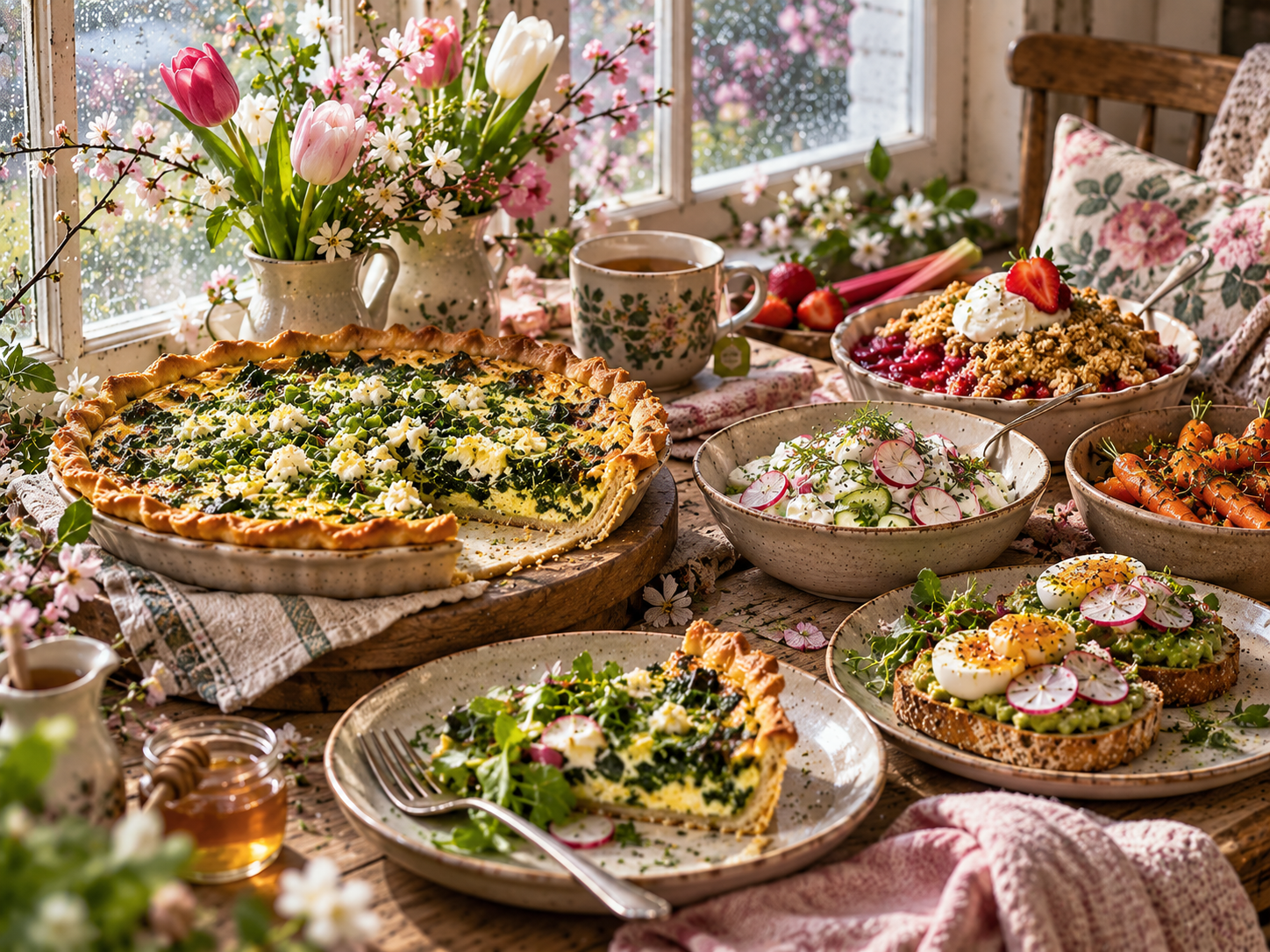
April is when the seasonal kitchen stops whispering about spring and starts tasting like it. Gardens are greening up, herbs are putting on new growth, and quick cool-season crops can move from seed to plate surprisingly fast. In warmer regions, spring harvests may already be generous; in colder places, April can still be a month of protected greens, early shoots and anticipation.
The April kitchen is fresh, bright and flexible. Peas, radishes, tender greens, spring onions, young carrots, herbs and regional spring fruit begin sharing the table. Even a small garden can contribute something now—a handful of chives, a bowl of lettuce or the first radishes pulled from damp soil.
What is seasonal in the April kitchen?
April harvests depend heavily on climate. Mild gardens may offer peas, lettuce, spinach, arugula, radishes, carrots, beets, spring onions, herbs, broccoli and other cool-season vegetables, while warm regions may already be transitioning away from crops that dislike heat. Colder gardens may only be beginning outdoor harvests. Strawberries can enter the season in some regions, while elsewhere they remain weeks or months away. Use what your local spring actually provides rather than forcing the calendar.

1. Spring Pea & Herb Risotto
Serves 4–6
Ingredients
- 1 1/2 cups Arborio rice
- 1 tablespoon olive oil
- 2 tablespoons butter, divided
- 4 green onions, sliced
- 5–6 cups warm broth
- 1 1/2 cups peas, fresh where available or frozen
- 1/2 cup grated Parmesan
- 1/2 cup chopped parsley, mint, chives or dill
- Zest and juice of 1/2 lemon
- Salt and black pepper
Instructions
- Heat olive oil and 1 tablespoon butter in a wide pan. Cook green onions briefly, then add rice and stir for 1–2 minutes.
- Add warm broth about 1 cup at a time, stirring regularly and allowing most of the liquid to absorb before adding more.
- When the rice is almost tender, stir in peas.
- Finish with remaining butter, Parmesan, herbs, lemon zest and juice. Season to taste.
2. Radish, Cucumber & Herbed Yogurt Salad
Serves 4
Ingredients
- 1 bunch radishes, thinly sliced
- 1 cucumber, thinly sliced
- 3/4 cup plain Greek yogurt
- 1 tablespoon lemon juice
- 2 tablespoons chopped dill
- 2 tablespoons chopped chives or green onion
- Salt and black pepper
Instructions
- Whisk yogurt, lemon juice, dill, chives, salt and pepper.
- Add radishes and cucumber and toss gently.
- Chill briefly before serving if desired.
Seasonal note: Cucumbers are not an April garden crop in many regions. Use greenhouse-grown or locally available cucumber where appropriate, or double the radishes and add tender lettuce for a more strictly cool-season version.
3. Spring Onion, Spinach & Goat Cheese Tart
Serves 6
Ingredients
- 1 sheet puff pastry
- 1 tablespoon olive oil
- 1 bunch spring onions, sliced
- 4 cups spinach
- 4 oz goat cheese
- 2 eggs
- 1/3 cup milk
- 1 teaspoon thyme
- Salt and black pepper
Instructions
- Heat oven to 400°F. Fit puff pastry into a tart pan or onto a parchment-lined baking sheet and lightly score a border.
- Cook spring onions in olive oil for 2–3 minutes. Add spinach and cook until just wilted.
- Whisk eggs, milk, thyme, salt and pepper. Arrange vegetables over pastry, add goat cheese and pour over the egg mixture.
- Bake 25–30 minutes until golden and set.
4. Honey-Roasted Baby Carrots with Dill
Serves 4
Ingredients
- 1 1/2 lb young carrots
- 1 1/2 tablespoons olive oil
- 1 tablespoon honey
- 1 teaspoon lemon juice
- 1/3 cup chopped fresh dill
- Salt and black pepper
Instructions
- Heat oven to 425°F.
- Toss carrots with olive oil, honey, salt and pepper.
- Roast 20–30 minutes until browned and tender.
- Finish with lemon juice and fresh dill.
5. Crispy Garden Greens & White Bean Quesadillas
Makes 4 large quesadillas
Ingredients
- 1 tablespoon olive oil
- 4 cups chopped spinach, chard or tender kale
- 1 15-oz can white beans, drained and rinsed
- 1/2 teaspoon cumin
- 1 tablespoon lemon or lime juice
- 1 1/2 cups shredded cheese
- 8 medium tortillas
- Salt and black pepper
Instructions
- Cook greens in olive oil until tender. Add beans, cumin, citrus juice, salt and pepper and lightly mash.
- Divide filling and cheese among four tortillas and top with remaining tortillas.
- Cook in a dry skillet over medium heat until crisp and golden on both sides and cheese is melted.
6. Spring Herb & Garlic Butter
Makes about 1 cup
Ingredients
- 1 cup softened butter
- 1 garlic clove, finely grated
- 1/2 cup finely chopped spring herbs such as chives, parsley, dill, thyme or tender rosemary
- 1 teaspoon lemon zest
- Pinch of salt
Instructions
- Mix all ingredients until evenly combined.
- Use immediately, refrigerate for short-term use, or portion and freeze for longer storage.
- Melt over vegetables, potatoes, eggs, pasta, bread or grilled foods.
Harvest rescue: Compound butter is an easy way to capture handfuls of herbs before they become overgrown or need trimming.
7. Strawberry-Rhubarb Yogurt Crumble
Serves 6–8
Ingredients
- 3 cups sliced strawberries
- 2 cups sliced rhubarb
- 1/3 cup sugar
- 1 tablespoon cornstarch
- 1 teaspoon vanilla
- 1 cup rolled oats
- 3/4 cup flour
- 1/2 cup brown sugar
- 1/2 teaspoon cinnamon
- 6 tablespoons melted butter
- Plain or vanilla Greek yogurt for serving
Instructions
- Heat oven to 375°F.
- Toss strawberries and rhubarb with sugar, cornstarch and vanilla and place in a baking dish.
- Mix oats, flour, brown sugar, cinnamon and butter until crumbly. Scatter over fruit.
- Bake 35–45 minutes until bubbling and browned. Serve warm with yogurt.
Seasonal note: Strawberry and rhubarb timing varies considerably by region. Treat this as an April recipe where local spring fruit has begun; otherwise save it for the month your local harvest arrives.
8. Pea Shoot, Radish & Egg Toasts
Serves 4
Ingredients
- 8 slices rustic bread
- 4 eggs
- 1 cup pea shoots or other tender greens
- 4 radishes, thinly sliced
- 1/2 cup ricotta or soft goat cheese
- 1 teaspoon lemon juice
- Olive oil
- Salt and black pepper
Instructions
- Toast bread and spread with ricotta or goat cheese.
- Cook eggs to your preference.
- Toss pea shoots with lemon juice, a drizzle of olive oil, salt and pepper.
- Top toast with greens, radishes and egg.
9. Quick Freezer Pea & Herb Soup Base
Makes about 4 cups
Ingredients
- 1 tablespoon olive oil
- 1 leek or 4 green onions, sliced
- 4 cups peas, fresh or frozen
- 3 cups broth
- 1/2 cup chopped parsley, mint or dill
- Salt and black pepper
Instructions
- Cook leek or green onions in olive oil until soft.
- Add peas and broth and simmer 5–8 minutes.
- Add herbs and blend until smooth. Season lightly.
- Cool promptly, portion into freezer-safe containers with room for expansion, label and freeze.
- When reheating, adjust seasoning and add cream, yogurt or lemon if desired.
10. Spring Garden Pizza with Peas, Greens & Herbs
Makes one large pizza
Ingredients
- 1 lb pizza dough
- 2 tablespoons olive oil
- 1 garlic clove, finely grated
- 1 1/2 cups shredded mozzarella
- 1 cup peas
- 2 cups tender greens
- 3 green onions, sliced
- 1/3 cup grated Parmesan
- 1/2 cup fresh herbs
- Lemon zest
- Salt and black pepper
Instructions
- Heat oven as hot as your pizza dough instructions recommend, ideally 475°F or higher.
- Stretch dough onto a prepared pan. Mix olive oil with garlic and brush over dough.
- Add mozzarella, peas, greens and green onions.
- Bake until crust is browned and cheese is bubbling.
- Finish with Parmesan, herbs, lemon zest and black pepper.
April rewards the gardener who keeps looking
Spring harvests rarely arrive all at once. One day there are three radishes. Then a handful of peas. Then suddenly the lettuce needs eating immediately and the herbs are growing faster than expected.
April cooking works best when it stays flexible. Build meals around what is ready rather than waiting for the garden to produce a grocery-store quantity of anything. A handful of herbs can become butter. Pea shoots can top toast. Extra greens disappear into quesadillas. The garden does not need to fill the entire plate to change the way dinner tastes.
Planting ahead for the May and early-summer kitchen
April is a major transition month. In some regions, warm-season planting is already underway; in others, frost remains a real possibility. Your local last-frost date and soil temperature should guide the transition rather than the calendar alone.
- In mild and warm climates: as conditions warm, beans, cucumbers, summer squash, basil and other warm-season crops may begin going into the garden. Tomatoes and peppers can be transplanted when nights and soil are reliably warm enough for them. Cool-season crops may need shade, quick harvesting or replacement as heat builds.
- In colder climates: continue hardening off appropriate cool-season seedlings and direct-sowing hardy crops as soil becomes workable. Warm-season tomatoes, peppers, basil and similar plants often remain indoors until frost danger has passed.
- Under protection: use greenhouses and tunnels to bridge cold nights, but ventilate aggressively on sunny days. Spring sunshine can turn a protected bed into an oven much faster than winter sun did.
- For succession harvests: continue small sowings of quick crops while conditions suit them. At the same time, begin thinking vertically and spatially: trellises for peas, beans and cucumbers can make room for more food without demanding more ground.
April is where the garden begins making promises about summer. A bean seed, a tiny basil plant and a tomato hardening off on the porch are not April dinner—but they are future meals already in motion.
What comes next?
May is where spring abundance begins meeting the first real hints of summer. Greens and peas may still be producing while strawberries, herbs, young roots and early warm-season crops begin widening the menu. The kitchen starts getting faster, fresher and a little less predictable—which is exactly what a living garden should do.
Follow the whole edible year: Visit Seasonal Garden Recipes for month-by-month recipes, preserving ideas and what to plant next.
Leave a Reply