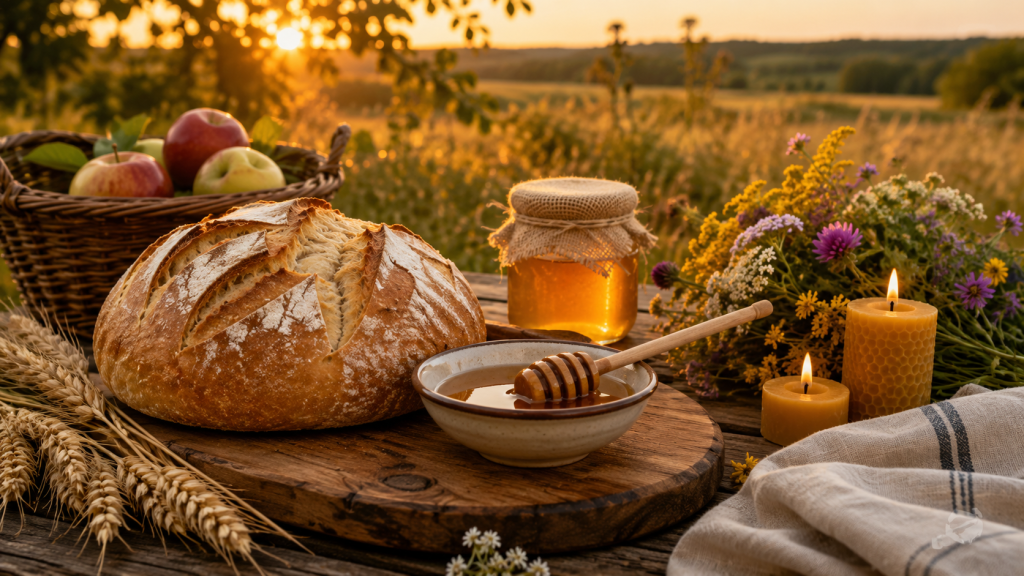
There are few combinations as simple—or as meaningful—as fresh bread and golden honey.
Across generations and cultures, these humble foods have represented nourishment, gratitude, and the quiet miracle of a successful harvest. A loaf of bread carries within it months of sunshine, rainfall, fertile soil, and patient labor. A jar of honey contains the work of thousands of bees visiting countless blossoms throughout spring and summer. Together, they tell the story of a season that has reached its fulfillment.
At Lughnasadh, the first harvest festival of the Wheel of the Year, bread and honey become more than food. They become symbols of everything the season has provided. They remind us that abundance is never created in a single day but arrives through countless small moments of growth, care, and cooperation between people and the natural world.
The song Bread & Honey celebrates this timeless harvest tradition. Its lyrics invite us to gather around the table, share what the earth has given, and recognize that the greatest feasts are often the simplest ones.
What Is Lughnasadh?
Lughnasadh, sometimes written Lughnasa or celebrated as Lammas, marks the beginning of the harvest season. Falling around August 1 in the Northern Hemisphere, it represents the moment when fields of grain begin their transformation into bread, communities gather to celebrate their labor, and gratitude replaces anticipation.
Unlike later autumn festivals that celebrate the completion of the harvest, Lughnasadh honors its beginning. It is the first reward after months of tending fields, orchards, gardens, and hives. Every loaf baked from newly harvested grain serves as a reminder that another cycle of growth has reached its purpose.
Historically, villages often gathered to bake bread from the first grain harvested that year. These loaves became symbols of hope as much as celebration. They represented confidence that the remaining harvest would continue successfully and that families would have enough food to carry them into the colder months ahead.
Today, many people continue this tradition by baking fresh bread, visiting local farmers markets, sharing meals outdoors, or simply taking time to appreciate the abundance that surrounds them.
The Story Hidden Inside Every Loaf
Bread is easy to overlook because it has become an everyday food. Yet every loaf tells an extraordinary story.
Long before flour reached the mixing bowl, tiny seeds were planted into cool spring soil. They rested beneath the earth before sending delicate green shoots toward the sunlight. Week after week, those shoots matured into tall fields of waving grain, drawing energy from sunlight through photosynthesis while rainfall carried nutrients deep into their roots.
By midsummer, the once-green fields had turned shades of gold. Farmers watched carefully, waiting for the precise moment when the grain reached maturity. Too early, and the kernels would not be fully developed. Too late, and storms or wildlife could threaten months of hard work.
Harvest transformed those golden fields into something entirely new. Grain was cut, dried, threshed, milled into flour, mixed with water, salt, and yeast, kneaded by hand, and finally baked into fragrant loaves that filled homes with warmth.
When we break bread during Lughnasadh, we celebrate every step of that remarkable journey.
Honey: Summer Captured in a Jar
If bread tells the story of grain, honey tells the story of flowers.
Every spoonful begins with blossoms opening beneath the warming spring sun. Bees travel from flower to flower collecting nectar, carrying tiny grains of pollen that make future fruits, vegetables, and seeds possible. Their work supports entire ecosystems, quietly connecting gardens, orchards, meadows, and farms.
Inside the hive, nectar slowly transforms into honey through evaporation and the remarkable cooperation of thousands of worker bees. What eventually reaches our table is concentrated sunlight stored within flowers—a sweet reminder of summer itself.
For centuries, honey has represented prosperity, hospitality, healing, and celebration. Offering bread with honey at Lughnasadh brings together two of nature’s greatest gifts: the harvest of the fields and the harvest of the blossoms.
More Than Food—A Celebration of Community
The chorus of Bread & Honey centers on sharing:
“Bread and honey
Warm and bright
Taste of earth
And taste of light.”
These lyrics remind us that food carries stories. Every slice of bread reflects the people who planted, harvested, milled, baked, and served it. Every drop of honey reflects thousands of bees working together across an entire landscape.
When the song later sings, “Every hand and every smile, resting from the field a while,” it captures one of the oldest traditions of harvest festivals: pausing together after hard work has been completed.
Modern life rarely encourages us to stop and celebrate ordinary accomplishments. Lughnasadh offers a different rhythm. It teaches that gratitude deserves its own season and that sharing a meal can be an act of thanksgiving.
The Symbolism Behind Bread & Honey
Throughout history, bread has symbolized nourishment, home, generosity, and the rewards of patient labor. Honey has symbolized sweetness, cooperation, prosperity, and the gifts that emerge when countless small efforts come together.
Together they form a beautiful metaphor for life itself.
- Grain reminds us that growth takes time.
- Honey reminds us that small acts accumulate into extraordinary results.
- The shared table reminds us that abundance becomes richer when it is shared.
These themes sit at the heart of Lughnasadh. The harvest is never only about food. It is about recognizing relationships—between people, seasons, animals, plants, and the land that supports them all.
The Meaning Behind the Lyrics
The lyrics of Bread & Honey paint the closing moments of a successful harvest day. Rather than focusing on the work itself, the song lingers on the peace that follows it. The fields have been tended, the grain has been gathered, and now the community comes together around a shared table.
“Bread and honey on the board
Summer’s gifts we now afford
Golden loaf and amber sweet
Harvest resting at our feet.”
These opening lines introduce the two central symbols of the song. The golden loaf represents the grain fields that have matured beneath months of sunshine. The amber honey recalls the flowers that bloomed earlier in the season and the bees that quietly pollinated orchards, gardens, and wild meadows. Side by side, they remind us that every harvest depends upon countless connections within nature.
The brief pre-chorus—“Pass the bread, pour the sun”—beautifully transforms an ordinary meal into something sacred. Passing bread becomes an act of generosity, while pouring honey is likened to pouring captured sunlight itself. It is a poetic reminder that the warmth of summer continues long after the season begins to fade.
“Bread and honey
Warm and bright
Taste of earth
And taste of light.”
Here, the song celebrates the partnership between earth and sky. Grain grows from fertile soil, while sunlight fuels every green blade through photosynthesis. Honey begins with flowers reaching toward the same light before bees carry that sweetness back to the hive. Together, bread and honey become symbols of the natural balance that makes life possible.
Later verses shift attention from the food itself to the people gathered around it.
“Voices rising through the air
Evening sunlight everywhere
Every hand and every smile
Resting from the field a while.”
This is perhaps the emotional heart of the song. Lughnasadh has never been only about crops or food. It has always been about community. Families, neighbors, and friends pause their labor long enough to celebrate what they have accomplished together. The smiles, conversations, and shared meal become just as important as the harvest itself.
The bridge broadens the perspective even further.
“Grain and blossom
Bee and tree
All the living
Share the feast.”
Rather than placing humanity at the center of the celebration, these lyrics recognize that every living thing participates in the harvest. Trees produce blossoms that feed bees. Bees pollinate flowers that later become fruit. Grain ripens beneath the sun. People gather the harvest, yet they are only one part of a much larger story unfolding across the landscape.
The final refrain celebrates completion without suggesting that the journey has ended. Every harvest also contains the seeds of the next growing season. Gratitude naturally becomes hope.
How to Celebrate Bread & Honey at Home
You do not need an ancient festival or elaborate ceremony to experience the spirit of Lughnasadh. Sometimes the simplest traditions become the most meaningful.
- Bake a fresh loaf of bread using locally milled flour if possible.
- Purchase honey from a nearby beekeeper to support local pollinators and small farms.
- Gather family or friends for an outdoor meal beneath the evening sky.
- Include seasonal fruits such as apples, blackberries, peaches, or plums alongside fresh bread.
- Take a quiet moment before eating to reflect on everyone—and everything—that helped bring the meal to your table.
- Thank the farmers, gardeners, orchard keepers, bakers, beekeepers, and countless pollinating insects whose work often goes unnoticed.
These small acts connect us with traditions that have endured for centuries. More importantly, they help us slow down long enough to recognize abundance while it is still present.
Listen to “Bread & Honey”
Bread & Honey is part of the Lughnasadh collection from Rhythm Rielly, a musical celebration of the Wheel of the Year that explores the beauty, symbolism, and traditions of the first harvest festival.
Continue Your Lughnasadh Journey
If you enjoyed Bread & Honey, you may also enjoy these companion songs celebrating the abundance of the harvest season:
- Apple in the Basket — Celebrate one of late summer’s sweetest gifts as apples ripen beneath the summer sun.
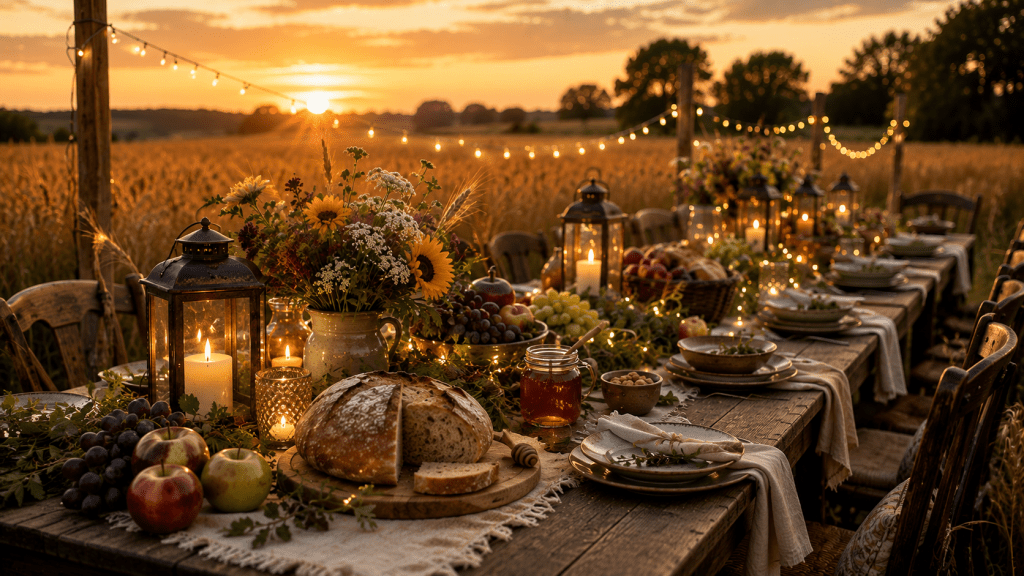
- Table in the Field — Discover the tradition of gathering together to share the harvest.
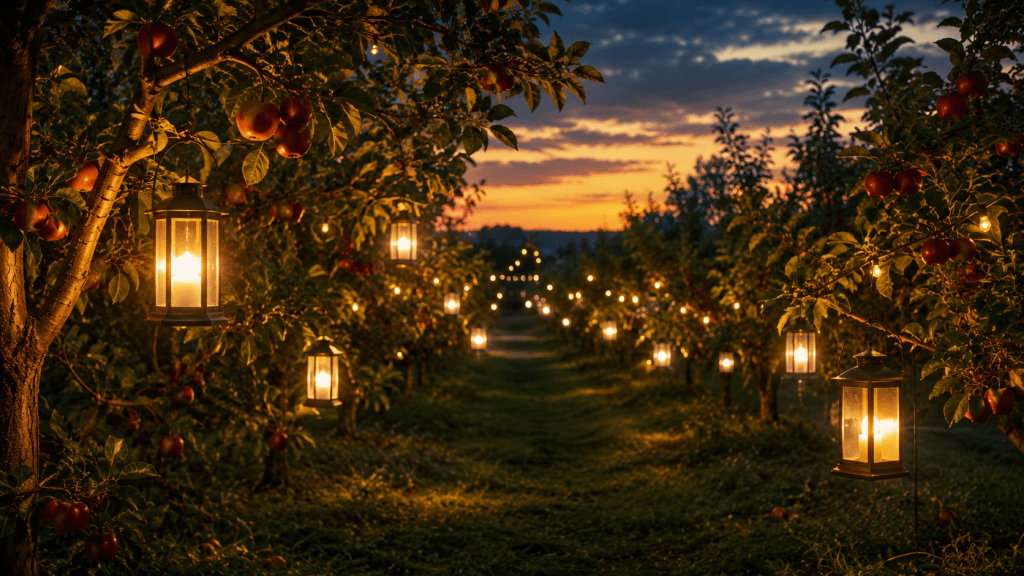
- Lanterns in the Orchard — Walk through a peaceful orchard as evening settles across Lughnasadh.
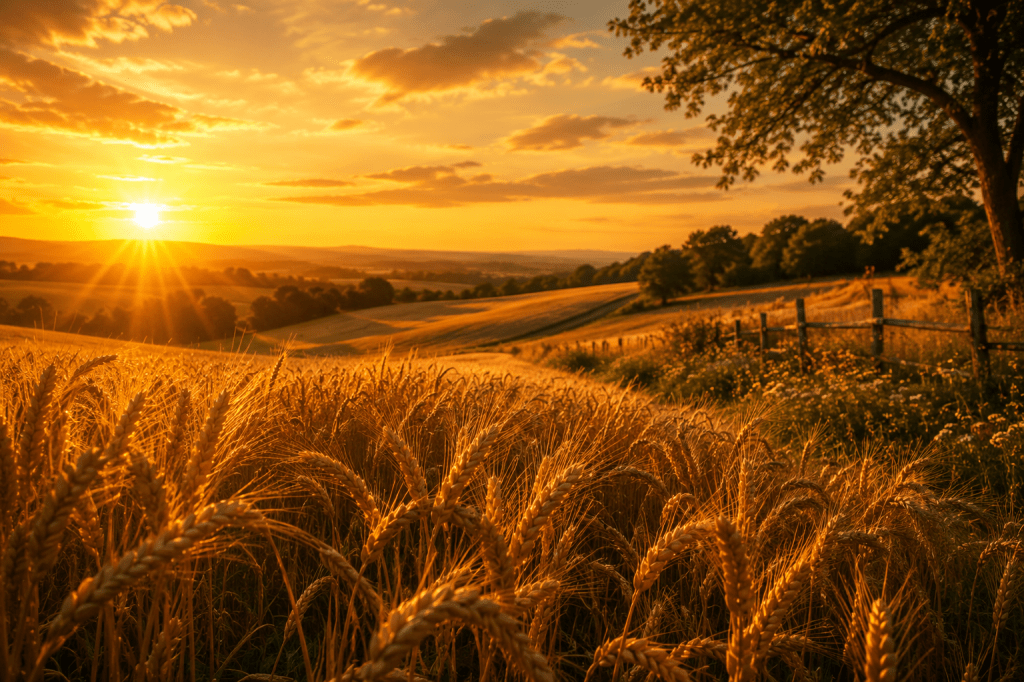
- Golden Day Leaning West — Reflect on the golden light that signals summer’s gradual turning toward autumn.
- Seeds for the Coming Year — Explore how every harvest carries the promise of seasons yet to come.
Learn More About Lughnasadh
- Encyclopaedia Britannica — Lammas
- Royal Horticultural Society — Plants for Pollinators
- Pollinator Partnership — Protecting Bees and Pollinators
- Slow Food International — Celebrating Local Food Traditions
Bring the Spirit of Lughnasadh Home
Disclosure: As an Amazon Associate, Rhythm Rielly earns from qualifying purchases. If you purchase through the links below, you help support the creation of free music, articles, and seasonal resources at no additional cost to you.
- 🍞 Artisan Bread Baking Book
- 🍯 Raw Honey
- 🧀 Rustic Wooden Serving Board
- 🕯️ Pure Beeswax Candles
- 🧺 Linen Table Runner
- 🌾 Harvest Wheat Wreath
Whether you bake your own loaf, drizzle local honey over warm bread, or simply gather with loved ones around the table, the spirit of Lughnasadh reminds us that abundance grows through patience, gratitude, and community. Every harvest begins with a single seed, and every shared meal carries the story of an entire season.


 Rhythm Rielly
Leave a comment