Every harvest tells a story.
It begins quietly in spring as tiny seeds disappear beneath cool soil. Weeks later, green shoots emerge toward the sunlight. Rain falls. Bees visit blossoms. Fields sway beneath warm summer skies. Day after day, countless small moments unfold almost unnoticed until one morning the landscape has changed. Grain stands tall. Orchards grow heavy with fruit. Gardens overflow with vegetables, herbs, and flowers. The promise of spring has become the abundance of late summer.
For thousands of years, people have paused to celebrate this remarkable transformation. Long before supermarkets made fresh food available year-round, the harvest determined whether families and entire communities would thrive through the coming winter. Every basket carried from the field represented security. Every loaf of fresh bread represented hope. Every shared meal became an expression of gratitude for the land, the weather, the people, and the countless living things that made another season possible.
Among the oldest and most enduring traditions of Lughnasadh is the harvest feast.
More than a meal, it is a gathering. More than a celebration, it is a reminder that abundance becomes richer when it is shared.
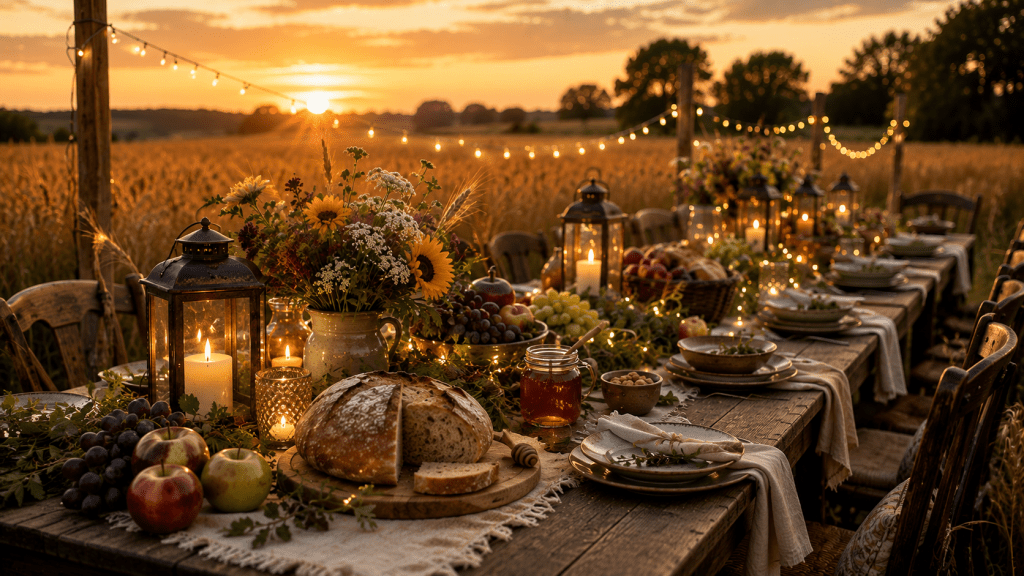
The song Table in the Field was inspired by this timeless tradition. It imagines a long wooden table standing beneath the open sky, surrounded by ripened grain, glowing lanterns, and the quiet joy of neighbors, friends, and family coming together after months of work. It is not a feast of extravagance, but one of gratitude.
What Is a Harvest Feast?
A harvest feast is exactly what its name suggests—a meal shared in celebration of the season’s abundance. Across cultures and throughout history, communities have gathered after bringing in the harvest to enjoy the fruits of their labor together.
While the foods themselves differ from one region to another, the purpose remains remarkably similar. Harvest feasts celebrate thankfulness, cooperation, generosity, and hope for the seasons still to come.
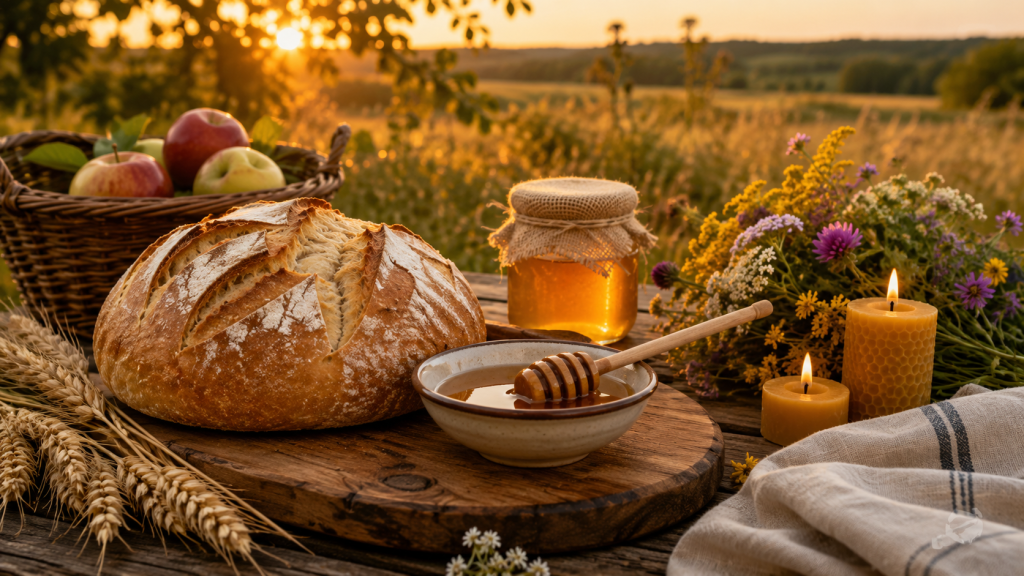
During Lughnasadh, often called Lammas in parts of the British Isles, these gatherings traditionally marked the first major harvest of grain. Freshly baked bread appeared alongside seasonal fruits, vegetables, cheeses, honey, roasted meats, herbs, and whatever the surrounding countryside had generously provided.
Unlike modern banquets where presentation often becomes the centerpiece, traditional harvest feasts celebrated simplicity. The value of the table was never measured by luxury but by the willingness to share.
That spirit continues to resonate today. Whether gathering around a farmhouse table, a backyard picnic, a community garden, or a family dining room, the harvest feast reminds us that meaningful meals are created by the people sitting around them.
Why the Table Matters
When people think about harvest celebrations, they often picture baskets overflowing with apples, fields of waving wheat, pumpkins, corn, or golden sunsets. Yet one of the most important symbols appears much later in the day.
It is the table.
A table transforms individual harvests into a shared celebration.
Bread baked in one kitchen sits beside vegetables grown in another garden. Honey collected from nearby hives rests beside homemade preserves, orchard fruit, fresh herbs, and steaming dishes prepared by many different hands. What began as separate efforts becomes one common feast.
Throughout history, tables have represented far more than furniture. They have served as places where stories are exchanged, friendships strengthened, disagreements resolved, traditions passed between generations, and gratitude expressed without needing many words.
The harvest table reflects this beautifully.
It reminds us that abundance grows through cooperation.
Farmers rely upon healthy soil. Orchards depend upon pollinating insects. Bakers depend upon grain. Families depend upon neighbors. Communities depend upon one another. Every place setting represents relationships extending far beyond what can be seen on the table itself.
The First Harvest of the Year
Lughnasadh holds a unique place within the Wheel of the Year because it celebrates the beginning—not the end—of the harvest season.
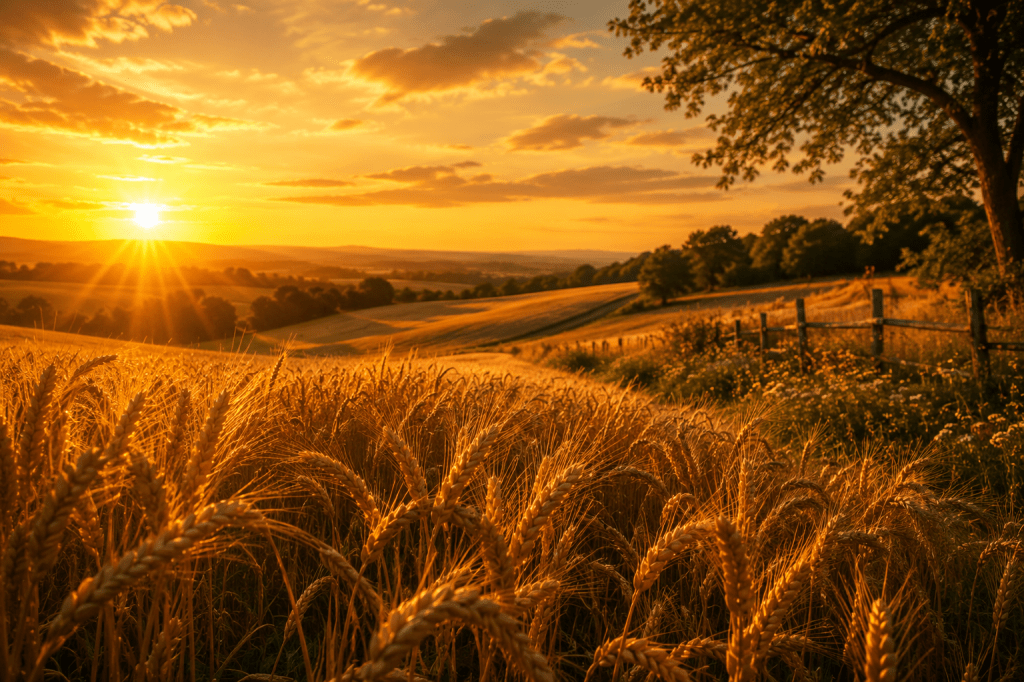
The first grain has been gathered, yet orchards continue ripening. Gardens remain productive. Blackberries begin appearing along country roads. Apples slowly deepen in color. Grapes swell beneath warm afternoons. Fields still promise more abundance to come.
This moment carries both gratitude and anticipation.
People celebrate what has already been received while looking forward with hope toward the remaining harvests of autumn.
That balance gives Lughnasadh its distinctive feeling. It is joyful without becoming nostalgic. It celebrates accomplishment while recognizing that nature’s work continues.
The harvest feast captures this perfectly. It pauses just long enough to say thank you before returning once more to the rhythms of the season.
The Meaning Behind “Table in the Field”
The opening image of the song appears almost like a painting.
“Table standing in the field
All the harvest now revealed
Bread and fruit and golden grain
Shared beneath the evening flame.”
Nothing elaborate happens.
No grand speeches are given. No kings or heroes arrive. Instead, the song begins with something wonderfully ordinary—a table waiting beneath the open sky.
That image reflects the heart of Lughnasadh itself.
The field is not merely a backdrop. It is a reminder of where every meal begins. Grain, fruit, vegetables, herbs, and honey all started their journey only a few steps away. The feast remains connected to the land that made it possible.
The simple phrase “all the harvest now revealed” carries quiet power. Months of unseen growth suddenly become visible. Seeds planted in hope have become nourishment that can finally be shared.
The chorus continues that invitation.
“Table in the field
Wide and long
Every heart
Inside the song.”
The table becomes large enough for everyone.
Its length is symbolic rather than literal. There is always room for another chair, another conversation, another loaf of bread, another friend arriving just before sunset.
The second verse gently shifts the focus from the table itself to the people gathered around it.
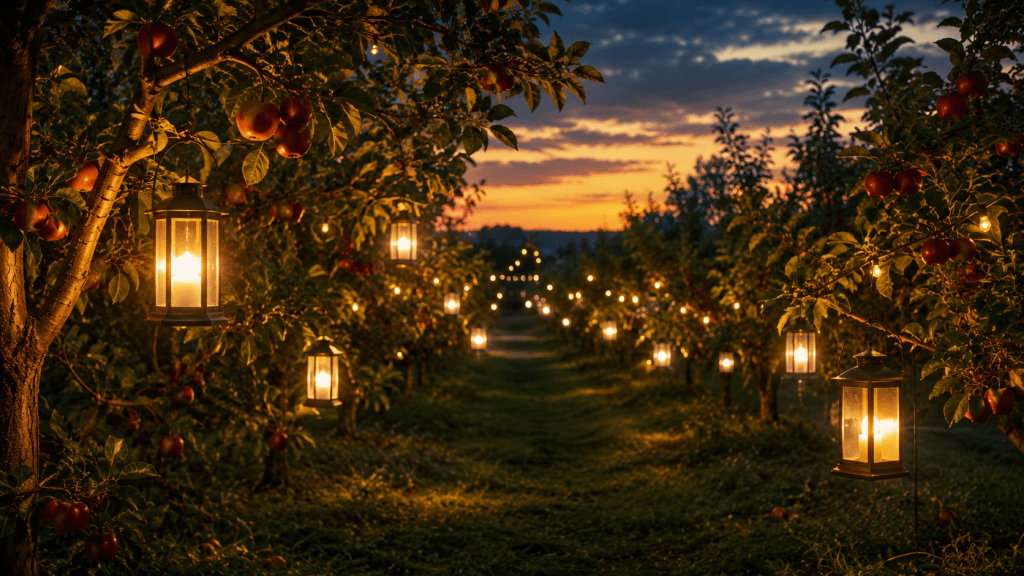
“Lantern glow and gentle breeze
Quiet moving through the trees
Every story, every cheer
Gathered close together here.”
As daylight slowly fades, conversation becomes the centerpiece of the feast. Lanterns begin to glow, not because darkness has fully arrived, but because the evening is unfolding at its own unhurried pace. The harvest is complete for the day. There is no need to rush.
This may be one of the most overlooked gifts of any harvest celebration.
For weeks or even months, attention has been focused on work. Fields demanded care. Gardens needed watering. Orchards required patience. Bees continued their tireless flights from blossom to blossom. Every day carried another task waiting to be finished.
Now, for one evening, everyone simply gathers.
The laughter, conversations, and shared memories become as nourishing as the food itself. Children hear stories from grandparents. Friends catch up after busy weeks. Neighbors celebrate one another’s successes. The harvest table becomes a place where relationships are strengthened alongside grateful hearts.
In many ways, this is what separates a harvest feast from an ordinary dinner. The food feeds the body, but the gathering feeds the community.
Why We Still Need Harvest Traditions
Although most of us no longer depend directly upon the success of a single harvest to survive the winter, the traditions surrounding Lughnasadh continue to offer something deeply valuable.
Modern life often moves at a relentless pace. Seasons blur together. Fresh produce is available year-round, making it easy to forget that every fruit, vegetable, grain, and flower still follows nature’s rhythms. We celebrate birthdays and holidays, yet rarely pause to recognize the quiet miracle unfolding in gardens, farms, orchards, and forests every summer.
A harvest feast invites us to slow down.
It reminds us that gratitude is not reserved only for extraordinary moments. Sometimes it begins with fresh bread still warm from the oven, ripe peaches from the market, tomatoes picked from the garden, or honey purchased from a local beekeeper.
These simple gifts reconnect us with the landscapes that sustain us.
They also remind us that no harvest is created alone. Farmers prepare fields long before seeds are planted. Gardeners patiently nurture young seedlings. Rain falls. Sunshine arrives. Pollinators visit blossoms. Bakers rise before dawn. Families prepare meals. Every plate placed upon the table represents an extraordinary chain of cooperation stretching far beyond our own sight.
Creating Your Own Harvest Feast
You don’t need a large farm or an elaborate celebration to experience the spirit of Lughnasadh. The most memorable harvest feasts are often the simplest.
Begin with seasonal foods whenever possible. Visit a local farmers market, roadside stand, or neighborhood orchard. Choose foods that are naturally abundant during late summer—fresh bread, honey, apples, berries, tomatoes, herbs, squash, grapes, cheeses, or roasted vegetables.
If weather allows, take your meal outdoors. A backyard, patio, park, or garden instantly changes the atmosphere. Add a simple linen runner, a few lanterns or candles, and perhaps a small bundle of wheat or wildflowers gathered responsibly.
Most importantly, invite others.
The table was never meant for one person alone.
Encourage everyone to bring something they love to share. A favorite family recipe, homemade jam, fresh fruit, or even a loaf from the local bakery contributes to the spirit of the feast. The goal is not perfection but participation.
Before the meal begins, take a quiet moment to reflect on the journey that brought each dish to the table. Consider the farmers, gardeners, bakers, beekeepers, orchard keepers, truck drivers, market vendors, and countless hands whose work made the gathering possible.
Gratitude grows naturally when we recognize how connected we truly are.
Harvest Feasts Around the World
While Lughnasadh has Celtic roots, the idea of celebrating the harvest through shared meals is nearly universal. Communities across the world have long recognized that bringing people together around food strengthens both families and neighborhoods.
Harvest festivals appear in many forms—from Thanksgiving celebrations in North America to Mid-Autumn Festival gatherings in East Asia, from European harvest suppers to local county fairs showcasing the season’s produce. Though traditions differ, the heart of each celebration remains remarkably familiar.
People gather.
Food is shared.
Gratitude is expressed.
Stories are told.
Hope is carried into the coming season.
This shared human experience helps explain why the imagery in Table in the Field feels timeless. Even listeners unfamiliar with Lughnasadh can recognize the warmth of friends gathered beneath an evening sky around a table filled with the gifts of the earth.
The Lasting Message of “Table in the Field”
The song concludes with one final blessing.
“Sunset falling
Soft and slow
Let the evening
Blessings flow.”
Nothing dramatic interrupts the scene. The day simply settles into evening, allowing gratitude to linger a little longer before the stars appear overhead.
The final refrain reminds us that while every harvest eventually comes to an end, the memories created around the table continue long after the last lantern has been extinguished.
That may be the greatest lesson of Lughnasadh.
The richest harvest is not measured only by overflowing baskets or full granaries. It is measured by relationships strengthened, generosity shared, traditions remembered, and gratitude carried forward into the seasons ahead.
Every harvest begins with a seed.
Every feast begins with an invitation.
And every table has room for one more chair.
Listen to “Table in the Field”
Table in the Field is part of Rhythm Rielly’s Lughnasadh collection, celebrating the beauty, traditions, and symbolism of the first harvest festival through original music inspired by nature and the Wheel of the Year.


 Rhythm Rielly
Leave a comment