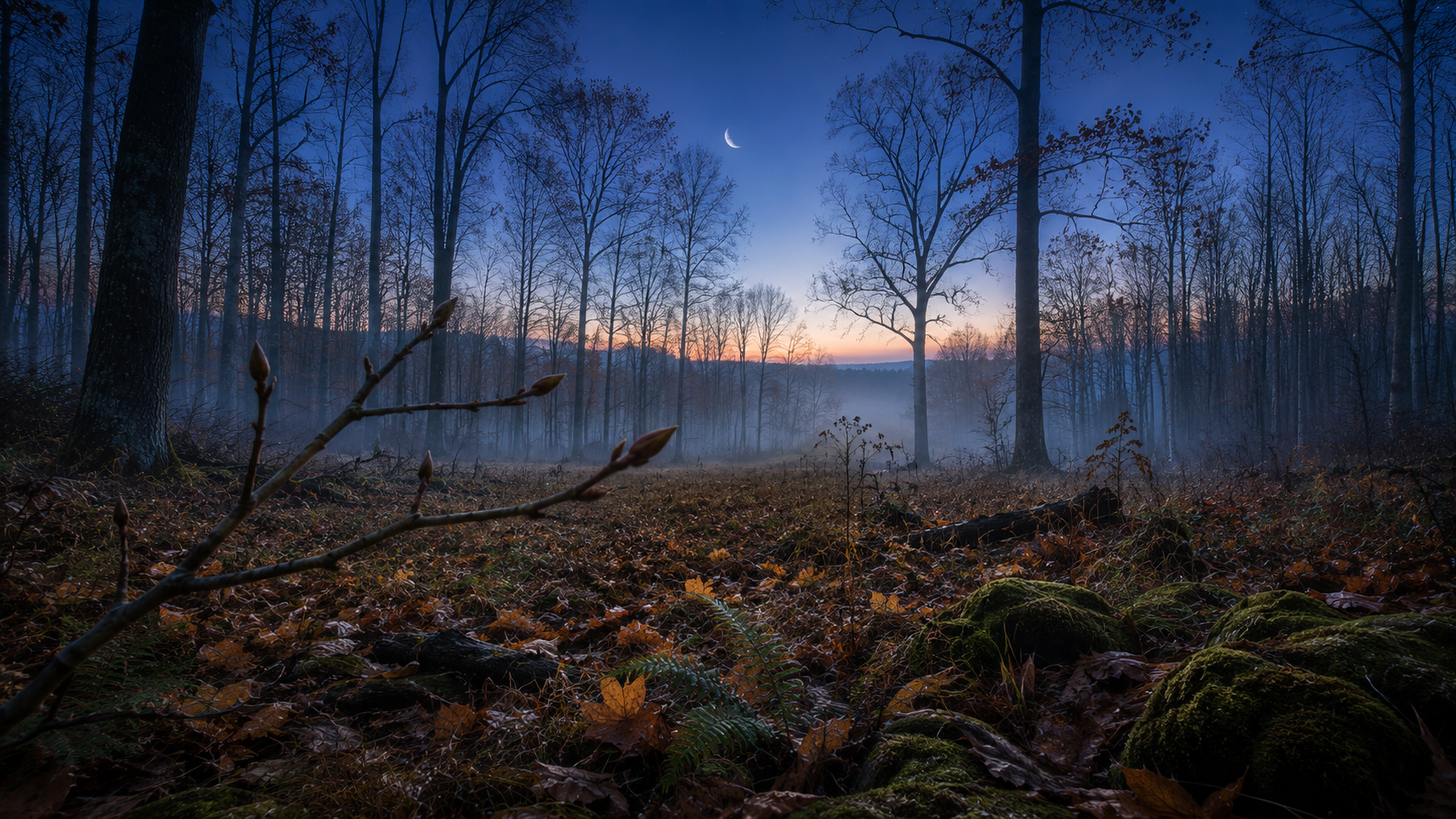
Near the end of the lunar cycle, the Moon becomes a slender curve of light in the early morning sky. The fullness has passed, the last quarter moon has turned, and only a shrinking crescent remains before the Moon disappears from view.
This is the waning crescent moon. Symbolically, it is often associated with rest, stillness, surrender, reflection, and restoration—a quiet interval when doing less can be part of completing the cycle.
Waning Crescent Moon at a Glance
- Illumination: less than 50% and decreasing toward the new moon
- Position in the cycle: after last quarter and before the dark/new moon
- Skywatching: best seen before sunrise, generally toward the eastern sky
- Symbolic themes: rest, surrender, stillness, restoration, reflection
- Simple practice: deliberately leave one nonessential thing undone and give yourself a quieter evening
What Is a Waning Crescent Moon?
The waning crescent is the final visible phase before the new moon. From Earth, less than half of the lunar disk appears illuminated, and that visible crescent becomes thinner as the Moon moves closer to the Sun’s apparent position in our sky.
Because of that geometry, the waning crescent rises in the hours before sunrise rather than dominating the evening sky. If you are awake early enough and conditions are clear, look toward the east before dawn.
Waning Crescent Moon Meaning
Modern lunar traditions commonly associate the waning crescent with rest, surrender, contemplation, intuition, and preparing to begin again. These are symbolic associations rather than scientifically demonstrated effects of the Moon on human behavior or outcomes.
The symbolism fits the phase beautifully. Very little visible light remains, yet the lunar cycle has not failed or stopped. It is simply approaching its quietest point. Instead of asking what can still be accomplished, the waning crescent offers another question: What if rest belongs to the rhythm?
Waning Crescent Ritual: Make Room for Rest
A waning crescent ritual does not need to become another project. In fact, simplicity suits this phase especially well.
- Reduce one demand. Choose something nonessential that can genuinely wait.
- Lower the stimulation. Dim unnecessary lights, step away from a screen, sit beside an open window, or spend a few quiet minutes outside when it is safe.
- Notice what remains unfinished. You do not have to solve it tonight. Simply acknowledge it without immediately turning it into a plan.
- Rest on purpose. Read, listen to music, journal briefly, take a bath, or go to bed earlier. The practice can end there.
Candles, tarot cards, crystals, tea, or other ritual objects can be included if they help create a reflective atmosphere, but none is required.
Dormancy: When Growth Becomes Invisible
Nature offers a useful counterpoint to the idea that visible productivity is the only kind that matters. In temperate climates, many deciduous trees enter dormancy as conditions change. Their leaves may fall and visible growth may slow dramatically, while living tissues remain protected in branches, trunks, roots, and buds.
Seeds can also wait. Depending on the species, germination may depend on conditions such as moisture, temperature, light, or the breaking of particular dormancy mechanisms. A seed that appears inactive can still contain an embryonic plant and stored resources for future growth.
Even an apparently quiet garden bed contains activity. Roots, fungi, bacteria, invertebrates, decomposing leaves, and other components of the soil ecosystem continue processes largely hidden from view. Stillness and emptiness are not the same thing.
Darkness Has Its Own Ecology
Human life can make darkness surprisingly easy to avoid, but night is an ordinary environmental condition for life on Earth. Many animals are nocturnal or most active around dusk and dawn. Moths visit night-blooming plants, bats hunt insects, and countless organisms become active while many daytime species rest.
This makes darkness another fitting metaphor for the waning crescent. When our own view becomes limited, life does not necessarily stop. Sometimes the important processes are simply harder to see.
Practical Ways to Observe the Waning Crescent
- Look for the Moon before dawn. A clear eastern horizon can make the thin crescent easier to spot.
- Leave something unfinished. Choose one nonessential task and deliberately allow tomorrow to have it.
- Observe a resting landscape. Look closely at a tree, seed head, perennial, or quiet garden bed for signs of life that are easy to overlook.
- Protect useful garden habitat. Where appropriate, leaf litter, hollow stems, seed heads, and undisturbed corners can provide habitat for wildlife.
- Experience natural darkness safely. Spend a few minutes outside without unnecessary bright light and allow your eyes time to adjust.
Waning Crescent Journal Prompts
- Where would rest be more useful than another push forward?
- What can remain unanswered for a little while?
- What part of my life may be changing even though I cannot see the result yet?
- What would a genuinely restorative end to this cycle look like?
How “Where the Spirits Walk Softly” Echoes the Waning Crescent
Where the Spirits Walk Softly enters the lunar cycle when almost everything has become quiet. Fields rest, visible light thins, and the song turns its attention toward what might remain when the obvious signs of activity disappear.
The title naturally evokes folklore, mystery, spirits, dreams, and unseen worlds. Those ideas belong to storytelling and spiritual interpretation rather than scientific claims. Yet the natural world offers its own literal version of the unseen: roots absorb water below ground, fungi move through organic matter, seeds wait beneath leaves, and nocturnal animals travel through darkness.
That overlap gives the song its connection to the waning crescent. What looks absent may simply be hidden, resting, changing, or waiting for conditions to shift.
Listen to “Where the Spirits Walk Softly”
Frequently Asked Questions
What does the waning crescent moon symbolize?
Modern lunar traditions commonly associate the waning crescent with rest, surrender, stillness, reflection, restoration, and preparation for a new cycle. These meanings are symbolic rather than scientifically established lunar effects.
When can you see a waning crescent moon?
The waning crescent is primarily a pre-dawn Moon. It rises during the late-night or early-morning hours and can often be seen toward the east before sunrise. Exact timing depends on the date and location.
How long does the waning crescent moon last?
The waning crescent spans the portion of the lunar cycle between the last quarter and new moon, roughly one week. Its appearance changes each morning as the illuminated crescent becomes thinner.
What should I do during the waning crescent moon?
If you use lunar phases as symbolic checkpoints, consider reducing unnecessary activity, resting, reflecting, spending quiet time outdoors, journaling, or simply allowing some questions and tasks to remain unfinished.
Bring the Practice Home
As an Amazon Associate, Rhythm Rielly earns from qualifying purchases at no additional cost to you.
A simple nature reflection journal can hold observations, dreams, or a few quiet lines without making reflection complicated. A moon phase field guide can help with identifying the crescent and understanding its timing, while a red-light stargazing flashlight can be useful when you need a little light while protecting dark-adapted vision.
Continue Through the Lunar Cycle
As the crescent thins away, the visible lunar journey reaches its quietest threshold. Continue to the dark moon, the final pause before the next visible cycle begins.
Or return to the complete Moon phases guide to explore the entire cycle.
Leave a Reply