Bake With the Seasons · November
By late November, the fruit bowl starts getting brighter again.
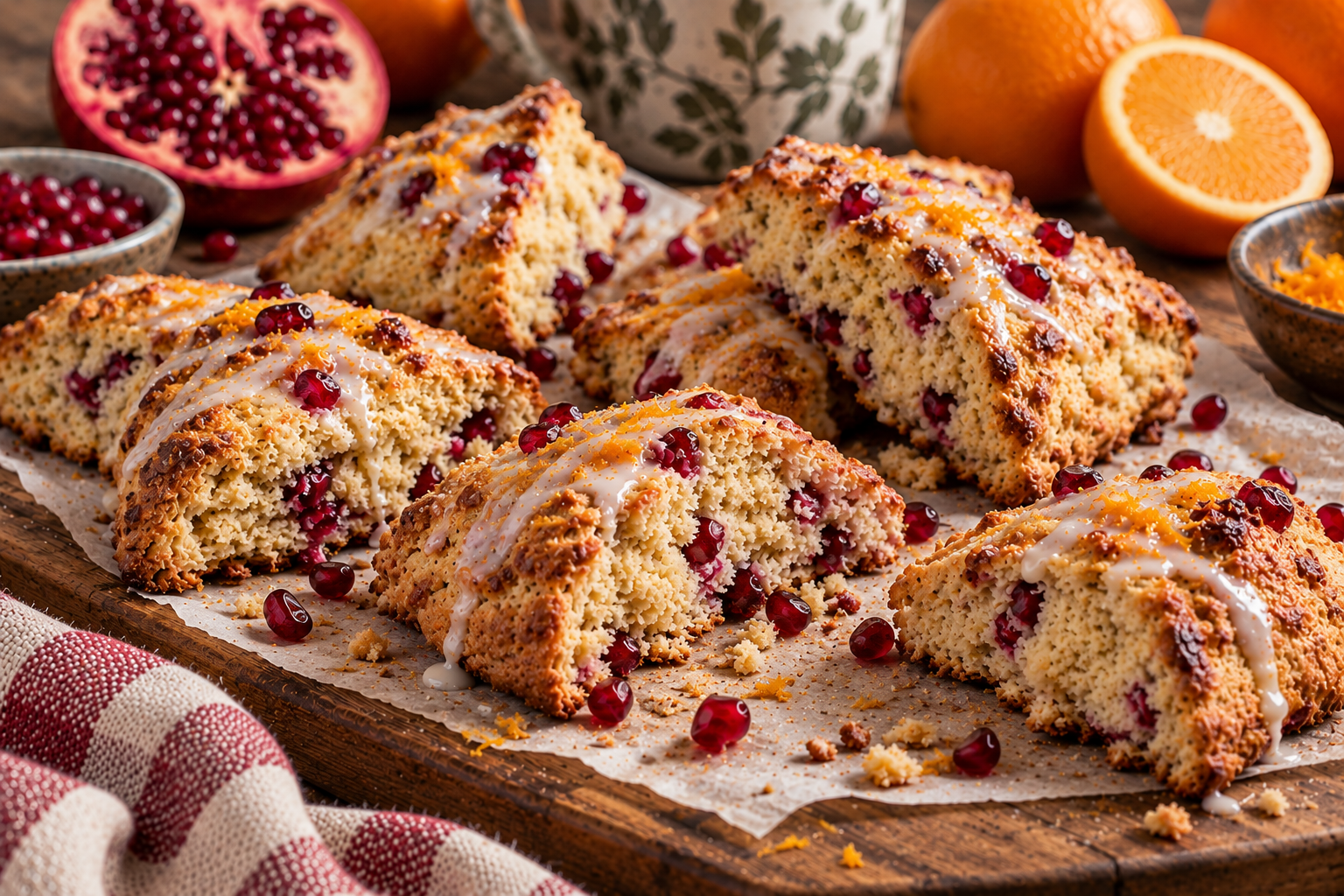
These pomegranate orange scones bring that color straight to the baking sheet: buttery, craggy scones fragrant with fresh orange zest and dotted with ruby pomegranate arils, finished with a light orange glaze.
They are festive without requiring December, pretty without requiring decorating skills, and just unusual enough to make an ordinary breakfast feel special.
Why You’ll Love These Pomegranate Orange Scones
- Fresh orange zest flavors the dough naturally
- Pomegranate arils add tart, juicy little bursts
- Cold butter creates tender, flaky layers
- The rustic shape means perfection is unnecessary
- A light orange glaze adds sweetness without burying the scone
- They can be frozen before baking for fresh scones later
Ingredients
For the Scones
- 2 cups all-purpose flour
- 1/3 cup granulated sugar
- 1 tablespoon baking powder
- 1/2 teaspoon fine salt
- Finely grated zest of 1 large orange
- 1/2 cup cold unsalted butter, cut into small cubes
- 1/2 cup cold heavy cream, plus a little more for brushing
- 1 large egg
- 1 teaspoon vanilla extract
- 3/4 cup pomegranate arils, well drained and patted dry
- Coarse or sparkling sugar, optional
For the Orange Glaze
- 3/4 cup powdered sugar
- 1–2 tablespoons fresh orange juice
- 1/2 teaspoon finely grated orange zest
- Pinch of salt
How to Make Pomegranate Orange Scones
1. Keep Everything Cold
Line a baking sheet with parchment paper. If your kitchen is warm, keep the butter and cream refrigerated until the moment you need them.
2. Make Orange Sugar
In a large bowl, rub the orange zest into the granulated sugar with your fingertips until fragrant. Whisk in the flour, baking powder, and salt.
3. Cut in the Butter
Add the cold butter and work it into the flour with a pastry cutter or your fingertips until you have an uneven mixture of crumbs with some pea-sized pieces of butter remaining.
Those imperfect pieces are useful. As the cold butter melts in the oven, it helps create the craggy, layered texture we want.
4. Add the Cream and Egg
Whisk the cold cream, egg, and vanilla together. Pour them into the flour mixture and stir gently just until a shaggy dough begins to form.
5. Fold in the Pomegranate
Gently fold in the pomegranate arils. A few may break and stain the dough pink in places; that is completely fine.
If the dough seems very dry, add cold cream one teaspoon at a time. Avoid adding more than necessary.
6. Shape the Scones
Turn the shaggy dough onto a lightly floured surface. Bring it together gently with your hands rather than kneading it smooth.
Pat it into a disk about 1 inch thick and cut into 8 imperfect wedges. Separate them on the prepared baking sheet.
7. Chill
Refrigerate the shaped scones for approximately 20–30 minutes. Meanwhile, preheat the oven to 400°F (205°C).
8. Bake
Brush the tops lightly with heavy cream and sprinkle with coarse sugar if desired.
Bake for approximately 18–24 minutes, until the tops and edges are golden brown and the centers are baked through.
Transfer to a rack and let cool before glazing.
9. Add the Orange Glaze
Whisk the powdered sugar, 1 tablespoon orange juice, orange zest, and salt together. Add additional juice a little at a time until the glaze is thick enough to drizzle.
Drizzle lightly over the cooled scones. The goal is citrusy ribbons of glaze, not complete frosting coverage.
Can You Really Bake Pomegranate Seeds?
Yes. The juicy red pieces we commonly call pomegranate seeds are technically arils: juice-filled flesh surrounding a small edible seed.
They can be baked into scones, muffins, and similar quick breads. Heat softens them somewhat, but they still provide little tart bursts and a bit of texture.
How to Keep Pomegranate Scones From Getting Wet
Pomegranate arils contain plenty of juice, so drain them well and pat them gently with paper towels before adding them to the dough.
Fold them in near the end and handle the dough gently. Crushing too many arils releases extra liquid and can turn the dough unnecessarily wet.
Why Cold Butter Matters in Scones
Cold butter should remain in little pieces throughout the dough rather than disappearing completely into the flour.
In the oven, those pieces melt and release steam, helping create a tender interior and irregular flaky pockets. Chilling the shaped scones before baking gives the butter another chance to firm up.
Don’t Make the Scones Too Perfect
Scone dough should look a little rough.
Overworking it into a perfectly smooth, uniform dough can make the finished scones tougher. Bring the mixture together only as much as necessary, then cut the disk into rustic wedges.
Uneven edges, little cracks, and a few visible pieces of butter are features, not mistakes.
Pomegranate Orange Scone Variations
- Orange almond: Add 1/4 teaspoon almond extract and scatter sliced almonds over the tops.
- Dark chocolate: Fold in a small handful of chopped dark chocolate.
- Cardamom orange: Add 1/2 teaspoon ground cardamom to the dry ingredients.
- Cranberry orange: Replace the pomegranate with chopped fresh cranberries for a sharper winter version.
- Unglazed: Skip the glaze and use a generous sprinkle of coarse sugar before baking.
Can I Freeze Scones Before Baking?
Yes. Freeze the shaped, unbaked wedges on a parchment-lined tray until firm, then transfer them to a freezer-safe container.
Bake them from frozen, brushing the tops with cream first. They will generally need a few additional minutes in the oven.
This is one of the nicest ways to have a genuinely fresh scone without making dough first thing in the morning.
How to Serve Pomegranate Orange Scones
Serve them slightly warm or at room temperature with coffee or tea.
They are flavorful enough to eat alone, but softened butter, orange marmalade, honey, or a spoonful of Greek yogurt all work beautifully alongside them.
Storage
Scones are best the day they are baked. Store leftovers in an airtight container at room temperature for approximately 2 days.
To revive them, warm unglazed or lightly glazed scones briefly in a low oven or toaster oven.
November’s Last Little Flash of Color
There is a point in late autumn when the landscape gets quieter and the produce aisle somehow gets brighter.
Pomegranates split open into tiny red jewels. Citrus begins piling up again. And suddenly a November baking table does not have to be entirely cinnamon-brown.
These scones belong right in that moment: buttery and warm, but bright enough to point toward winter.
More November Baking
- Cranberry Orange Bread — tart cranberries and fresh orange in a soft citrus loaf.
- Apple-Cranberry Hand Pies — flaky individual pastries filled with cinnamon apples and ruby cranberries.
- Pear Cardamom Cake — tender pear cake scented with fragrant cardamom.
- Persimmon Pudding Cake — a soft, rich dessert made with deeply ripe persimmon.
One last handful of ruby fruit before November leaves the kitchen.
Leave a Reply