Bake With the Seasons · March
March doesn’t have to taste like pale berries and wishful thinking. Sometimes the brighter route is pineapple.
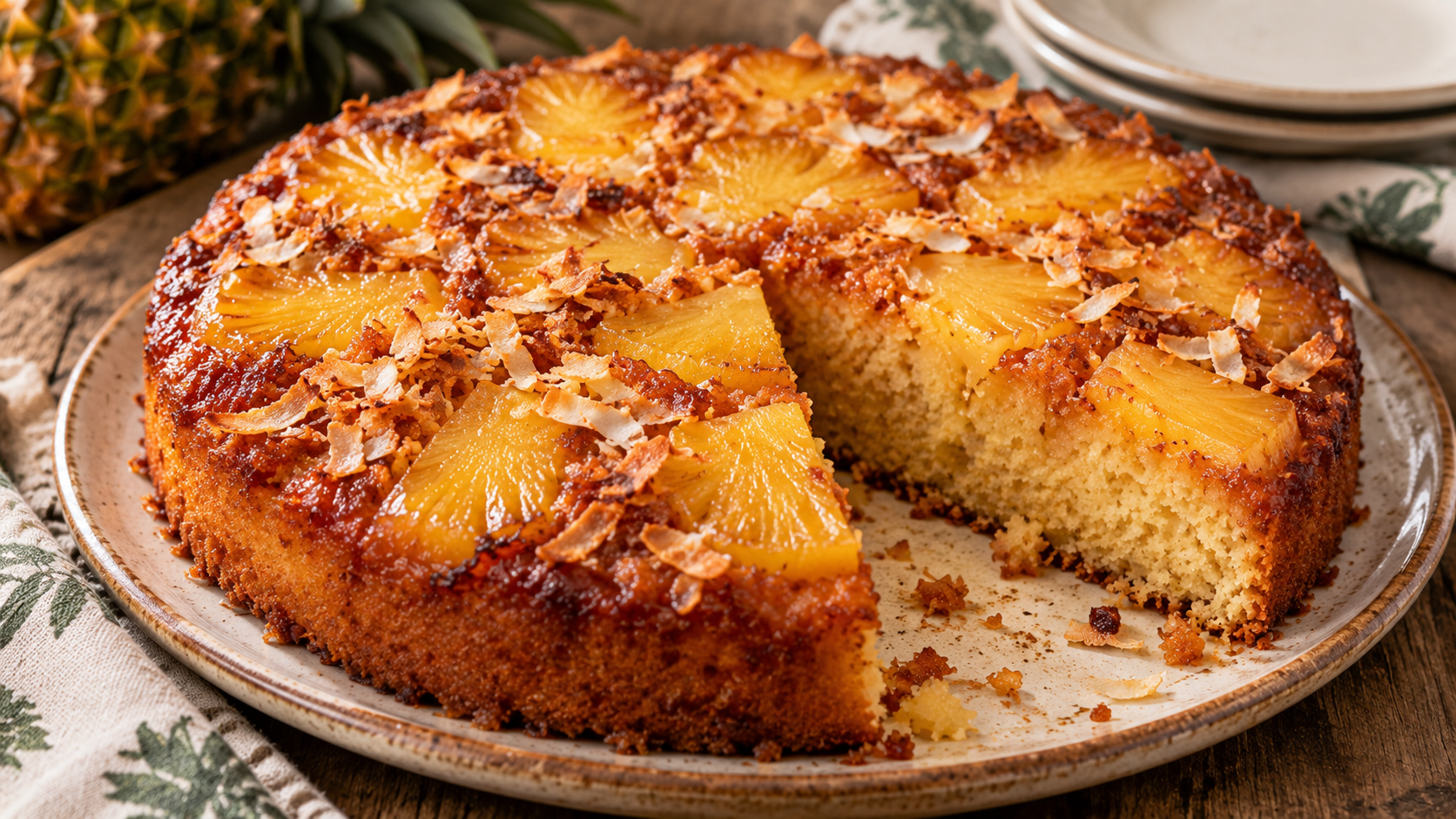
This pineapple coconut upside-down cake puts fresh pineapple over a buttery brown-sugar topping and a soft coconut cake. As it bakes, the fruit caramelizes at the edges, its juices mingle with the sugar and butter, and the whole thing turns glossy when the cake is flipped from the pan.
It’s sunny, sticky in the right places, and unapologetically different from the berry-and-citrus cakes that can dominate early-spring recipe collections.
Why You’ll Love This Pineapple Coconut Upside-Down Cake
- Fresh pineapple becomes caramelized and jammy as it bakes
- Coconut adds richness without overpowering the fruit
- No frosting is required—the topping decorates itself
- The cake stays tender with coconut milk and yogurt
- You can arrange the pineapple naturally instead of chasing perfect rings
- It brings a completely different flavor profile to March baking
Ingredients
For the Pineapple Topping
- 3 tablespoons unsalted butter, melted
- 1/2 cup packed light brown sugar
- Pinch of fine salt
- 2 to 2 1/2 cups fresh pineapple, peeled, cored, and cut into roughly 1/3-inch slices or bite-size pieces
For the Coconut Cake
- 1 1/2 cups all-purpose flour
- 1 1/2 teaspoons baking powder
- 1/4 teaspoon baking soda
- 1/2 teaspoon fine salt
- 1/2 cup unsalted butter, softened
- 3/4 cup granulated sugar
- 2 large eggs
- 1 teaspoon vanilla extract
- 1/2 teaspoon coconut extract, optional
- 1/2 cup full-fat canned coconut milk, well stirred
- 1/4 cup plain Greek yogurt or sour cream
- 1/2 cup unsweetened shredded coconut
How to Make Pineapple Coconut Upside-Down Cake
1. Prepare the Pan
Preheat the oven to 350°F (175°C). Grease a 9-inch round cake pan with sides at least 2 inches high. For extra insurance, place the pan on a rimmed baking sheet before it goes into the oven.
2. Make the Brown-Sugar Base
Pour the melted butter into the cake pan and tilt it to coat the bottom. Sprinkle the brown sugar and salt evenly over the butter.
3. Arrange the Pineapple
Pat the pineapple lightly with a clean towel to remove excessive surface juice, then arrange it over the brown sugar.
You can overlap slices loosely or create a mosaic from irregular pieces. Leave a little room for caramel to bubble between them. This is fruit, not bathroom tile; perfect geometry is unnecessary.
4. Mix the Dry Ingredients
Whisk together the flour, baking powder, baking soda, and salt in a medium bowl.
5. Cream the Butter and Sugar
Beat the softened butter and granulated sugar until creamy and slightly lighter, about 2–3 minutes. Add the eggs one at a time, followed by the vanilla and coconut extract, if using.
6. Finish the Batter
Mix in the Greek yogurt. Next, add the dry ingredients in two additions, alternating with the coconut milk. Fold in the shredded coconut just until evenly distributed.
The batter should be thick enough to spread rather than pour like pancake batter.
7. Assemble Carefully
Spoon the batter over the pineapple in several dollops. Spread it gently toward the edges so you don’t drag the fruit out of place.
8. Bake
Bake for approximately 40–50 minutes, until the cake is golden, the center springs back lightly, and a tester inserted into a cake-heavy area comes out clean or with a few moist crumbs.
9. Flip While Warm
Let the cake rest in the pan for about 10–15 minutes. Run a thin knife around the edge, place a serving plate over the pan, then carefully invert both together.
Lift the pan slowly. If a piece of pineapple stays behind, put it back where it belongs. We are baking cake, not submitting forensic evidence.
Fresh Pineapple or Canned Pineapple?
Fresh pineapple gives this cake the liveliest flavor and a pleasantly varied texture. It also lets you cut pieces to fit naturally across the pan instead of building the familiar ring-and-cherry pattern.
Canned pineapple can still work. Choose pineapple packed in juice rather than heavy syrup, drain it thoroughly, and blot away excess moisture before arranging it over the sugar.
Why Coconut Works With Pineapple
Pineapple brings acidity, floral sweetness, and plenty of juice. Coconut brings fat, nuttiness, and a mellow sweetness that rounds those sharper edges.
Using both coconut milk and shredded coconut gives the cake flavor without relying entirely on coconut extract. The optional extract is there for people who want the coconut to announce itself from across the room.
Is Pineapple Really a March Ingredient?
Seasonality depends on where food is grown, not simply the month printed on a temperate-climate calendar. Pineapple is a tropical crop rather than an early-spring backyard fruit for most readers.
For Bake With the Seasons, March is also about widening the lens beyond the same handful of temperate berries and citrus fruits. Pineapple gives us a bright transitional bake while reminding us that different growing regions have different agricultural rhythms.
How to Keep Upside-Down Cake From Sticking
- Grease the sides of the pan. The butter under the fruit mainly protects the bottom.
- Don’t let the cake cool completely in the pan. The caramel becomes stickier as it cools.
- Wait about 10–15 minutes before flipping. Immediately is too fragile; hours later is too sticky.
- Loosen the edge first. A thin knife helps release any caramelized spots around the sides.
- Use a plate larger than the cake. Hot caramel deserves boundaries.
Why Is My Pineapple Upside-Down Cake Soggy?
Usually, excess fruit moisture is the culprit. Pineapple is juicy, so blotting the cut fruit before it enters the pan helps. Avoid pouring leftover pineapple juice into the topping.
Also make sure the center is fully baked. The fruit-covered surface can make the cake look done before its interior structure has completely set.
Pineapple Coconut Cake Variations
- Pineapple lime: Add finely grated lime zest to the cake batter.
- Pineapple ginger: Add 1/2 teaspoon ground ginger or a little finely chopped crystallized ginger.
- Pineapple rum: Add 1 tablespoon dark rum to the topping for an adult dessert.
- Pineapple macadamia: Add chopped toasted macadamia nuts to the cake or scatter a few around the finished edge.
- Pineapple cardamom: Add 1/4 teaspoon ground cardamom to the dry ingredients for a warmer aromatic note.
How to Serve Pineapple Coconut Upside-Down Cake
This cake is especially good slightly warm, when the caramelized pineapple is still soft and glossy. Serve it plain, with softly whipped cream, or with vanilla or coconut ice cream.
For something tangier, a spoonful of Greek yogurt or crème fraîche balances the brown-sugar topping beautifully.
Storage
Because the fruit topping holds plenty of moisture, refrigerate leftovers after the first day. Keep the cake covered for up to 4 days.
Let chilled slices sit at room temperature for 20–30 minutes or warm them briefly before serving. The caramel and coconut flavors become much more expressive once the cake loses its refrigerator chill.
A Brighter Side of March
March baking doesn’t have to be a waiting room for strawberry season. There are roots, herbs, nuts, stored fruits, tropical crops, preserved harvests, and all sorts of flavors worth noticing while the temperate garden wakes up.
Pineapple and coconut take us somewhere warmer for one cake. Next, we’ll come back to the spring garden from an entirely different direction.
More March Baking
- Rhubarb Vanilla Custard Bars — tart rhubarb and creamy vanilla custard over buttery shortbread.
- Carrot, Cardamom & Pistachio Loaf — a fragrant spring loaf with grated carrot and toasted nuts.
- Honey Pear & Thyme Galette — stored pears, honey, herbs, and rustic pastry.
- Pistachio Rose Cake — a tender nut cake with a restrained floral note.
No fluorescent cherries required. Pineapple can handle the drama all by itself.
Leave a Reply