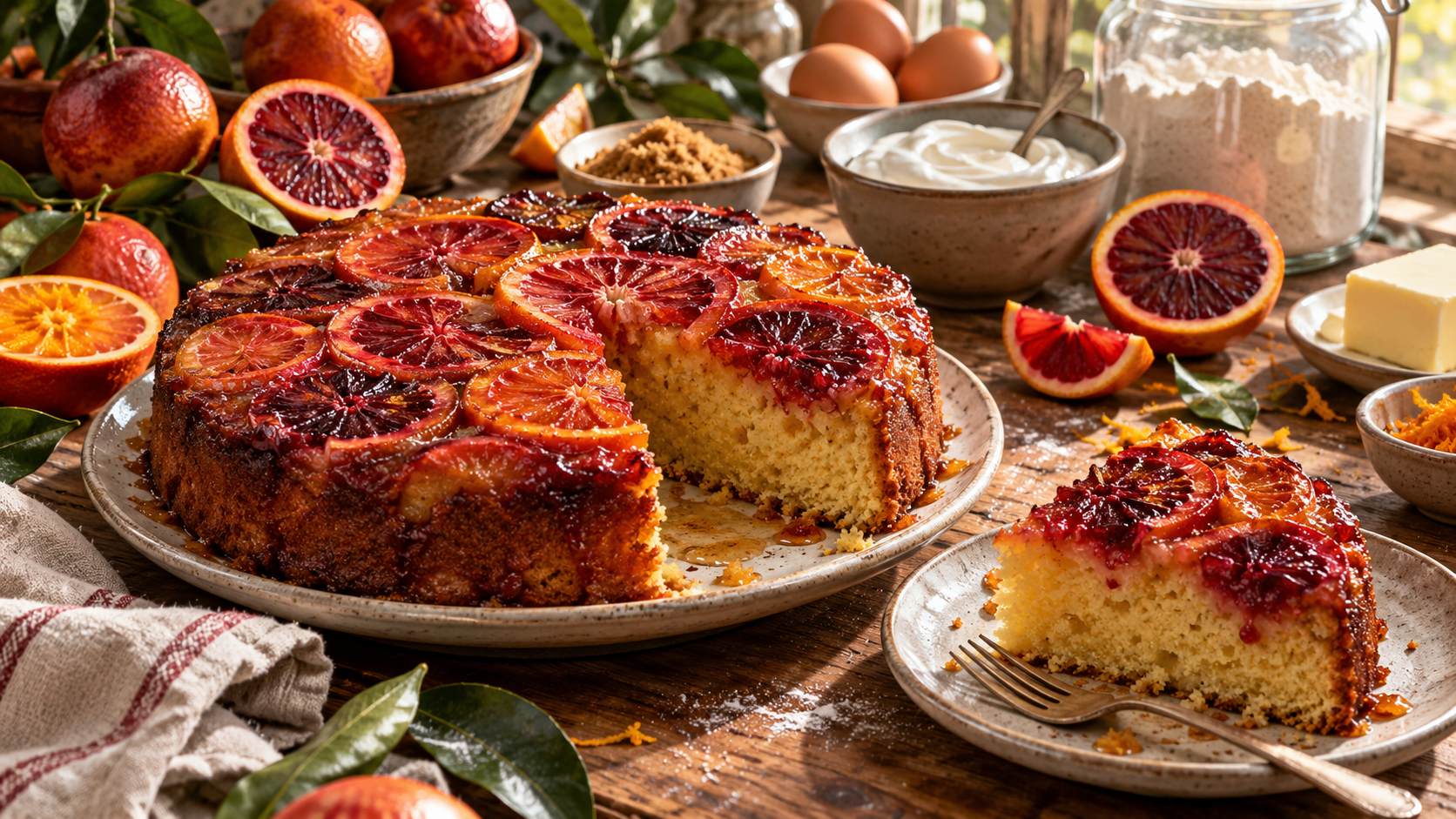
Bake With the Seasons · January
Some winter fruit seems almost determined to make up for the gray skies outside. Blood oranges are one of them. Slice one open and suddenly January has shades of ruby, coral, crimson, and deep orange hiding beneath an ordinary citrus peel.
This blood orange upside-down cake puts those colors right on top. Thin citrus rounds bake over a buttery brown-sugar layer while a tender orange-scented cake rises underneath. Once inverted, the fruit becomes glossy and lightly caramelized, with just enough pleasant citrus bitterness to keep the cake from tasting overly sweet.
It looks dramatic, but the method is wonderfully simple: arrange the oranges, mix the batter, bake, and turn the whole thing over.
Why You’ll Love This Blood Orange Upside-Down Cake
- Shows off the extraordinary color of winter blood oranges
- No frosting or decorating skills required
- Greek yogurt keeps the cake tender
- Fresh zest and juice flavor the batter
- Beautiful enough for a winter gathering
- Each cake looks a little different depending on the oranges
Ingredients
For the Blood Orange Topping
- 3–4 blood oranges
- 3 tablespoons unsalted butter, melted
- 1/3 cup packed light brown sugar
- Pinch of fine salt
For the Orange Cake
- 1 1/2 cups all-purpose flour
- 1 1/2 teaspoons baking powder
- 1/4 teaspoon baking soda
- 1/2 teaspoon fine salt
- 3/4 cup granulated sugar
- 1 tablespoon finely grated blood orange zest
- 1/2 cup unsalted butter, softened
- 2 large eggs
- 1/2 cup plain Greek yogurt or sour cream
- 1/4 cup fresh blood orange juice
- 1 teaspoon vanilla extract

How to Make Blood Orange Upside-Down Cake
1. Prepare the Pan
Preheat the oven to 350°F (175°C). Grease a 9-inch round cake pan and line the bottom with a round of parchment paper.
2. Slice the Blood Oranges
Cut the ends from the oranges, then slice them crosswise into thin rounds, roughly 1/8 to 1/4 inch thick. Remove any visible seeds as you go.
For a softer topping with less bitterness, trim the peel and most of the white pith from each round. Alternatively, leave the peel on for a more dramatic stained-glass appearance and a pleasantly bittersweet citrus edge.
3. Build the Caramelized Citrus Layer
Pour the melted butter into the prepared pan and sprinkle the brown sugar and a small pinch of salt evenly over it. Arrange the blood orange slices across the bottom, overlapping them slightly where needed.

4. Mix the Dry Ingredients
Meanwhile, whisk together the flour, baking powder, baking soda, and salt in a medium bowl.
5. Make the Orange Sugar
In a large bowl, rub the granulated sugar and blood orange zest together with your fingertips until the sugar smells strongly citrusy. This releases the fragrant oils from the peel and spreads them throughout the cake.
6. Finish the Batter
Beat the softened butter into the orange sugar until creamy. Next, mix in the eggs one at a time, followed by the Greek yogurt, blood orange juice, and vanilla.
Fold in the dry ingredients just until the batter is combined. Avoid overmixing once the flour goes in so the finished crumb stays tender.
7. Assemble and Bake
Spoon the batter gently over the arranged oranges, then spread it to the edges without disturbing the fruit underneath.
Bake for approximately 35–45 minutes, until the center springs back lightly and a toothpick inserted into the cake portion comes out clean or with a few moist crumbs.
8. Invert the Cake
Let the cake cool in the pan for about 10–15 minutes. Run a thin knife around the edge, place a serving plate over the pan, and carefully flip the two together.
Then lift away the pan and peel off the parchment. If an orange slice stays behind, simply place it back where it belongs while everything is still warm.
Should You Leave the Peel on Blood Oranges?

Either approach works, but they create slightly different cakes. Leaving the rind intact gives the topping its most striking appearance. However, citrus peel and white pith naturally bring bitterness, even after baking in butter and sugar.
If you enjoy marmalade, that bittersweet edge may be exactly what you want. For a softer, sweeter fruit layer, remove most of the peel and pith before arranging the slices.
Why Does Blood Orange Color Vary So Much?
Cut into several blood oranges and you may find one that is almost ordinary orange inside, another streaked with red, and another that looks deep burgundy. That variation is normal and depends on the cultivar and growing conditions.
How to Keep an Upside-Down Cake From Sticking
- Grease the pan well. Pay attention to the sides as well as the bottom.
- Use parchment. A parchment round adds inexpensive insurance beneath the sticky fruit layer.
- Don’t wait until the cake is completely cold. The caramelized sugar releases more easily while still warm.
- Loosen the edges first. A thin knife around the pan helps prevent torn sides.
- Flip confidently. Use a plate larger than the cake pan and turn the cake in one controlled motion.
Can I Use Regular Oranges?
Yes. Cara Cara oranges make a particularly pretty substitute, while navel oranges produce a more familiar golden-orange cake. Mandarins can also work, although their smaller size changes the pattern on top.
Blood Orange Upside-Down Cake Variations
- Blood orange and almond: Replace 1/4 cup of the flour with almond flour and add a few drops of almond extract.
- Blood orange and cardamom: Add 1/2 teaspoon ground cardamom to the dry ingredients.
- Blood orange and rosemary: Add a small amount of very finely chopped rosemary for an herbal winter note.
- Blood orange and olive oil: Replace the softened butter in the cake with 1/2 cup mild extra-virgin olive oil for a different but equally citrus-friendly crumb.
- Mixed citrus: Combine blood orange rounds with thin Meyer lemon or Cara Cara orange slices.
What to Serve With Blood Orange Cake
Because the fruit already creates such a glossy top, this cake doesn’t need frosting. Serve it plain, or add softly whipped cream, crème fraîche, Greek yogurt, mascarpone, or a small scoop of vanilla ice cream.
Helpful Tools for Blood Orange Upside-Down Cake

This section contains paid affiliate links. As an Amazon Associate I earn from qualifying purchases, at no additional cost to you.
Microplane Premium Classic Zester — A fine zester captures the fragrant outer peel without digging deeply into the bitter white pith.
Zulay Kitchen Stainless Steel Lemon Squeezer — Useful for extracting fresh citrus juice for the batter without chasing seeds around the bowl.
ThermoWorks ThermoPop 2 — An instant-read thermometer gives you another way to check the center of a cake when you want to avoid overbaking it.
Storage
Store leftover cake covered in the refrigerator for up to 4 days. Because the fruit topping contains plenty of moisture, refrigeration is preferable to leaving the cake on the counter for several days.
For the nicest texture, let a refrigerated slice sit at room temperature for 15–20 minutes before serving.
Baking With Blood Oranges in Winter
Blood oranges are one of those ingredients that make seasonal cooking feel less like a restriction and more like a discovery. Their winter appearance is brief enough to feel special, and their extraordinary interiors need almost no embellishment.
More January Baking

Meyer Lemon Loaf — Tender lemon cake soaked with bright Meyer lemon syrup.

Orange-Date Muffins — Fresh orange and dates in an easy winter breakfast bake.

Orange Marmalade Thumbprint Cookies — Buttery citrus cookies with glossy marmalade centers.
January may be the quietest part of the garden, but cut open a blood orange and winter suddenly doesn’t look quiet at all.
Leave a Reply